Does a Single Transition Piece Actually Work Across Every Studio-to-Street Outfit, or Is That Oversold?

Quick Answer: A single transition piece works well as a general formula but does have real limits — it performs most reliably for moderate weather and lower-sweat studio activities, while high-sweat workouts and significant weather swings genuinely benefit from a slightly expanded, activity-specific transition approach rather than relying on exactly one universal piece for every scenario.
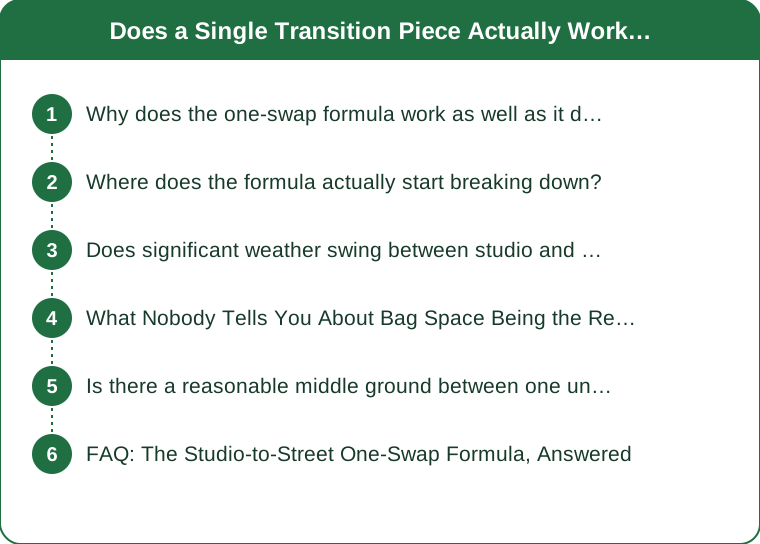
Why does the one-swap formula work as well as it does in the first place?
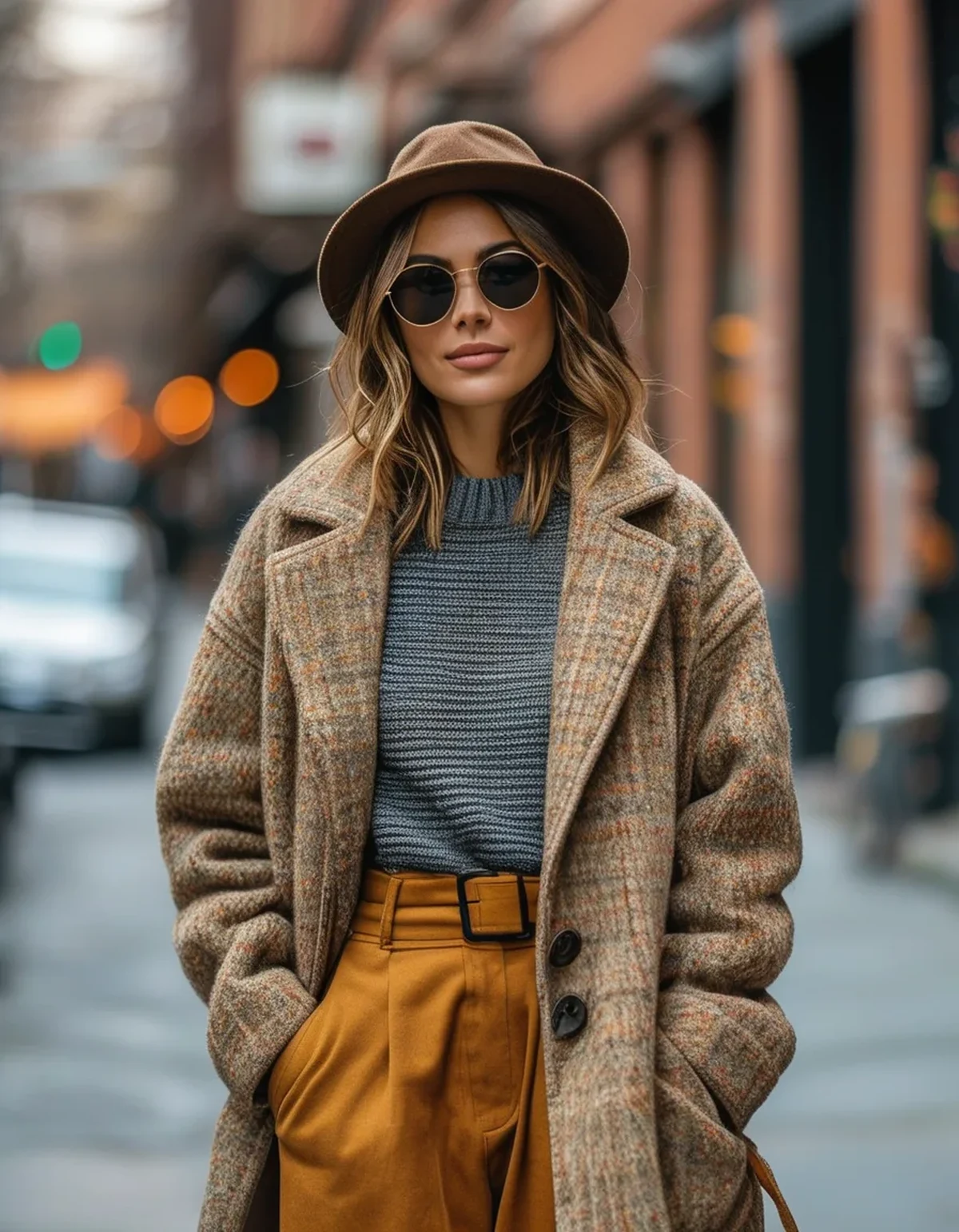
A single well-chosen transition piece (a structured jacket, a wrap skirt, or a longer cardigan) changes the overall silhouette and styling read enough to make an outfit look intentional rather than purely athletic, which is the main visual problem the formula is solving — this core mechanism is genuinely reliable across many scenarios, which is why the formula works as a general default.
Where does the formula actually start breaking down?
High-sweat studio activities (hot yoga, intense cycling) create a specific problem the formula doesn’t address: dampness and odor concerns that a single transition piece over damp workout clothes underneath doesn’t fully solve, meaning a more complete change of the base layer, not just an outer transition piece, may be genuinely necessary for these specific studio types.
Does significant weather swing between studio and street also break the formula?
Yes — a transition piece chosen for indoor studio temperature doesn’t automatically provide enough warmth for a significant temperature drop outside, particularly in colder months, meaning the formula’s clean simplicity works best in moderate weather, while more significant weather swings genuinely require an additional layer beyond just the one transition piece.

What Nobody Tells You About Bag Space Being the Real Constraint on Flexibility
Carrying multiple transition options (rather than relying on exactly one) is limited less by the styling logic and more by practical bag space and convenience, which is likely why the one-piece formula became popular in the first place — it’s a genuinely practical compromise for people who don’t want to carry a full second outfit, even though a slightly more flexible, situation-specific approach would technically work better.
Is there a reasonable middle ground between one universal piece and a full outfit change?
Carrying two lightweight options (a packable transition piece plus a compact change of top specifically for high-sweat days) provides meaningfully more flexibility than strictly one piece, without going all the way to a full second outfit — this modest expansion addresses the sweat and weather gaps in the pure one-swap formula while remaining reasonably practical to actually carry.
FAQ: The Studio-to-Street One-Swap Formula, Answered
Does the type of transition piece matter for which studio activities it works best with?
Yes — structured pieces (blazers, structured jackets) tend to work better for lower-sweat activities like Pilates or barre, while more relaxed, easily washable pieces handle higher-sweat activities more practically.
Is it reasonable to just accept looking more ‘gym-obvious’ after high-sweat workouts instead of solving for it?
For many people, yes — accepting a more visibly athletic look specifically after intense sweat sessions is a reasonable choice, reserving the full transition effort for lower-sweat studio days where it’s more achievable.
Does a compact, packable extra top defeat the point of traveling light for a studio session?
Not significantly — a single lightweight packable top adds minimal bulk compared to a full outfit change, making it a reasonable addition for people who want more flexibility without fully abandoning the light-packing goal.
TL;DR:
- The one-swap formula works reliably by changing an outfit’s overall silhouette and styling read
- High-sweat studio activities and big weather swings are where the single-piece approach genuinely breaks down
- Bag space convenience, more than styling logic, is why the one-piece version became the default formula
- Carrying one packable transition piece plus a compact spare top covers most of the formula’s real gaps
The formula is a good general default, not a universal rule — sweat level and weather swing are the two variables worth planning around separately.
Keep Reading
This article is for general informational and styling purposes only. Fit, sizing, and product availability may vary.