Why the Studio to Street Outfit Needs a Third Piece Once Evenings Turn Cool

Quick Answer: The summer studio-to-street formula is two pieces plus a shoe change - leggings and a top that reads as an outfit. From late August the temperature drop between the studio and the street is large enough that you need a genuine third piece, and it has to be one you can carry into class without a bag problem. The best third pieces are structured, compact and not made of sweatshirt fleece: a light trench, a shirt jacket or a fine knit that packs flat.
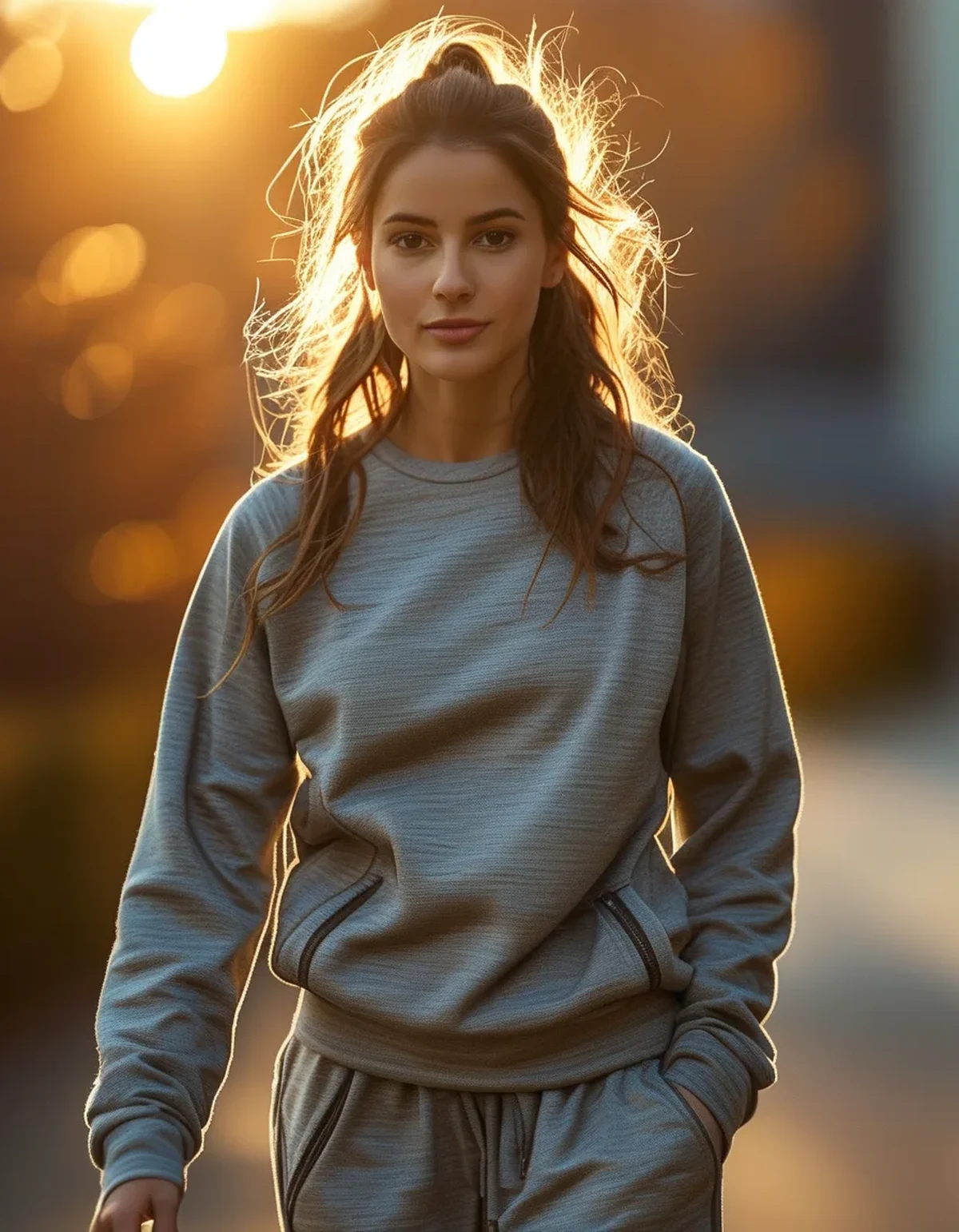
You walked out of the six o’clock class in the same two pieces you have worn since May.
The air had dropped ten degrees while you were inside and the whole outfit stopped working between the door and the corner.
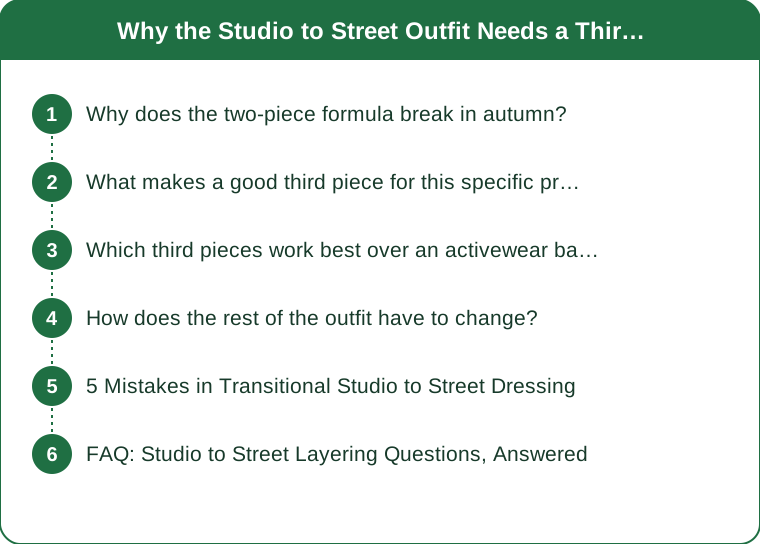
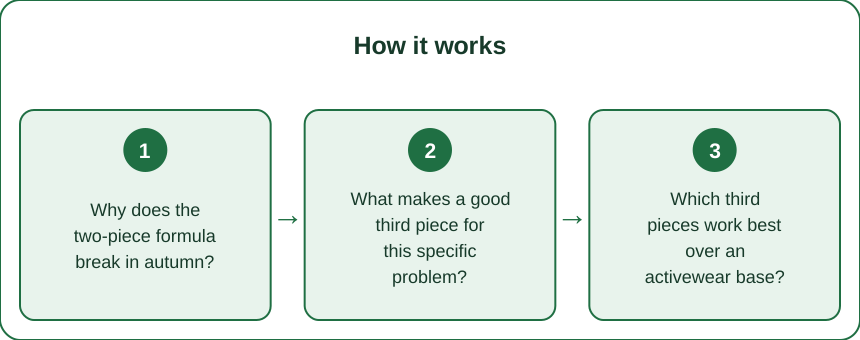
Why does the two-piece formula break in autumn?
Because it relied on the street being the same temperature as the studio, which is true for about four months a year and false for the rest.
A post-class body cools fast. You leave slightly damp and with elevated skin blood flow, which makes ten degrees feel like more than ten degrees.
The evening drop is steeper in late summer than in midsummer, so the gap between arriving and leaving widens exactly when you notice it least.
Sleeveless and cropped pieces stop being viable outdoors, which removes half the summer rotation at once.
And the outfit visually stops matching the street. Everyone else has moved into a layer, and a bare-shouldered summer set reads as unfinished rather than as effortless.
Which means the formula does not need replacing, it needs extending - same base, one more piece.
What makes a good third piece for this specific problem?
It has to pack flat. A piece you cannot get into a small bag will not come with you, and a piece that does not come with you does not solve anything.
It should be structured rather than soft. A shirt jacket, light trench or unlined blazer instantly reframes activewear as an outfit; a fleece hoodie does the opposite.
It needs to work over a fitted top without bulk, since your base layer is thin and any excess volume shows immediately.
Length matters - hitting at the high hip or below the seat both work, and the awkward mid-seat length is the one to avoid over leggings.
Colour should contrast with the base rather than match it, since a third piece in the same black as everything else adds warmth without adding definition.
And it must tolerate being crushed in a bag, which rules out anything that needs to be hung to look right.
Which third pieces work best over an activewear base?
The shirt jacket is the strongest all-round option. It has structure, packs reasonably flat, works open or closed and looks deliberate over leggings in a way a cardigan does not.
A light trench or mac is the most transformative and the least packable, so it suits driving or short walks more than a crowded bag.
A fine merino knit is the most compact and the warmest per gram, and it is the best option if bag space is genuinely tight.
An unlined blazer works better than people expect over a matching set, and it is the fastest route from studio to somewhere with tablecloths.
A quilted or liner-style jacket is the practical cold-evening answer, and the short versions avoid the shapelessness that longer ones bring over leggings.
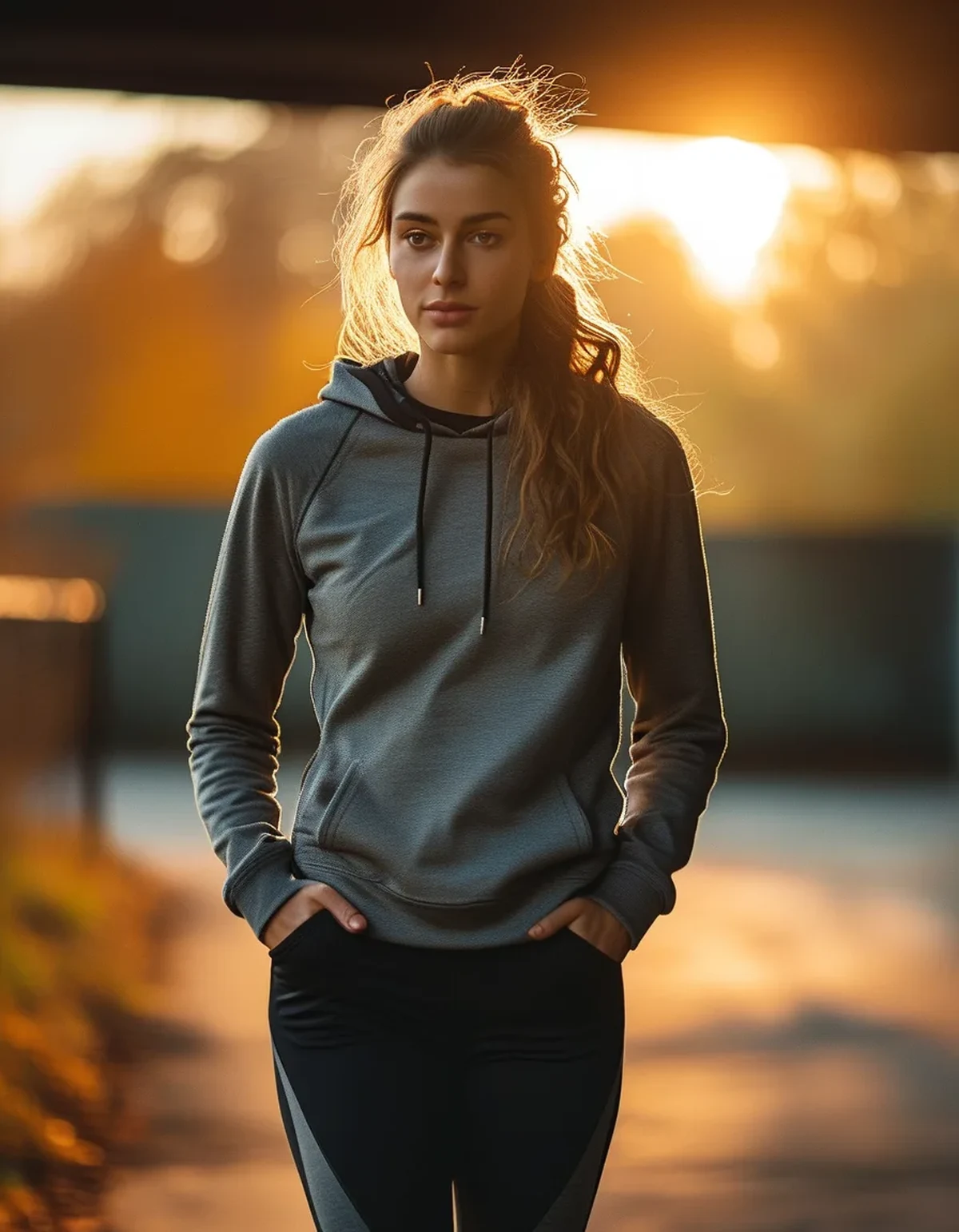
What does not work: the oversized pullover hoodie, which is warm, comfortable and the single fastest way to make an outfit look like sportswear again.
How does the rest of the outfit have to change?
The bottom half goes full length. A 7/8 legging with a cool ankle undermines any amount of effort above the waist, and this is the change that does the most work.
The shoe carries more weight than it did in summer. A leather trainer, a loafer or a clean boot moves the outfit off the gym floor; a running shoe anchors it there.
Socks become visible and therefore a decision, which is a small thing that separates a considered autumn outfit from a summer one wearing extra clothes.
The bag matters more, since you are now carrying a layer as well as class kit, and a structured tote reads very differently from a drawstring gym sack.
Consider a base top with sleeves, which extends how long the third piece can stay off and makes the transition less abrupt.
And keep the palette tighter than in summer - two colours plus one contrasting layer, rather than the brighter mixes that work in July.
5 Mistakes in Transitional Studio to Street Dressing
1. Reaching for the pullover hoodie. It is warm and comfortable and it undoes everything else. If the third piece has a drawstring hood and a kangaroo pocket, the outfit reads as gym clothes regardless of what is underneath.
2. Keeping the 7/8 legging. The ankle gap is the most reliable tell that an outfit was planned for a different season. Full length in autumn is the single highest-return change.
3. Choosing a third piece that will not fit in the bag. The best jacket in the world stays at home if it does not pack, and then you are back to two pieces on a cold street. Packability is a functional requirement, not a nice-to-have.
4. Matching the layer to the base. A black jacket over a black set adds warmth and no definition, and the whole outfit flattens. Contrast is what makes the third piece look chosen.
5. Ignoring the shoe. People spend all their attention on the layer and then walk out in a chunky trainer. The shoe is the fastest and cheapest way to change what an outfit communicates, and it takes ten seconds.
And the bonus: leaving without checking the evening temperature. The studio-to-street problem is entirely predictable, and a fifteen-second look at the forecast before packing the bag solves it every time.
FAQ: Studio to Street Layering Questions, Answered
What is the single best third piece to buy?
A shirt jacket in a neutral that is not black. It packs acceptably, works open or closed, layers over fitted tops without bulk and reframes activewear as an outfit.
Can I still wear a matching set in autumn?
Yes - a matching set is the strongest base for layering because the third piece becomes the only decision. Just make it full length.
How do I carry a jacket to class without a big bag?
Choose packable materials - a fine knit, an unlined shirt jacket or a light mac - and fold rather than stuff. A structured tote handles this far better than a drawstring bag.
Is a denim jacket a good option over activewear?
It works, but it is heavier and less warm than it looks, and denim over leggings can read as casual rather than considered. A shirt jacket in a technical or cotton twill usually looks better.
What about hoodies - are they always wrong?
A fitted zip hoodie under a structured layer is fine. It is the oversized pullover as the outermost piece that flattens an outfit.
How cold does it need to get before I need a proper coat?
Once evenings are consistently in single figures, a light jacket stops being enough and a proper coat becomes the third piece. At that point choose one that works over both activewear and normal clothes.
Should I change tops after class?
If the class was hard, yes - a damp base layer under a jacket is the fastest way to be cold. A spare fitted long sleeve weighs nothing and solves it.
TL;DR:
- The summer two-piece formula assumed the street matched the studio, which stops being true in late August.
- Add a structured, packable third piece - shirt jacket, light mac or fine merino knit.
- Avoid the oversized pullover hoodie; it undoes everything else in the outfit.
- Go full length on the bottom half and change the shoe, which does more than any other single swap.
- Contrast the layer with the base rather than matching it, or the outfit flattens.
Same base, one more piece, and the transitional weeks stop catching you at the studio door.
See It in Motion
Seen here: High Waist Yoga Leggings with Inner Pocket — shop it on bubblelime.com
Keep Reading
This article is for general informational and styling purposes only. Fit, sizing, and product availability may vary.