Why the Bag Decides Whether Your Studio-to-Street Outfit Works

Quick Answer: The bag is the largest single object in your silhouette and the one item that is unambiguously not sportswear or is unambiguously gym kit. A structured bag in leather, canvas, or a matte technical fabric reads as intentional; a slouchy branded holdall overrides everything else you are wearing. Change the bag before you change anything else.
The outfit worked in the mirror. Then you caught your reflection in a shop window on the walk to the coffee place and it had stopped working entirely.
Nothing about the clothes changed in those ninety seconds. What changed is that you were carrying the bag, and the bag is doing more visual work than the top and the leggings combined.
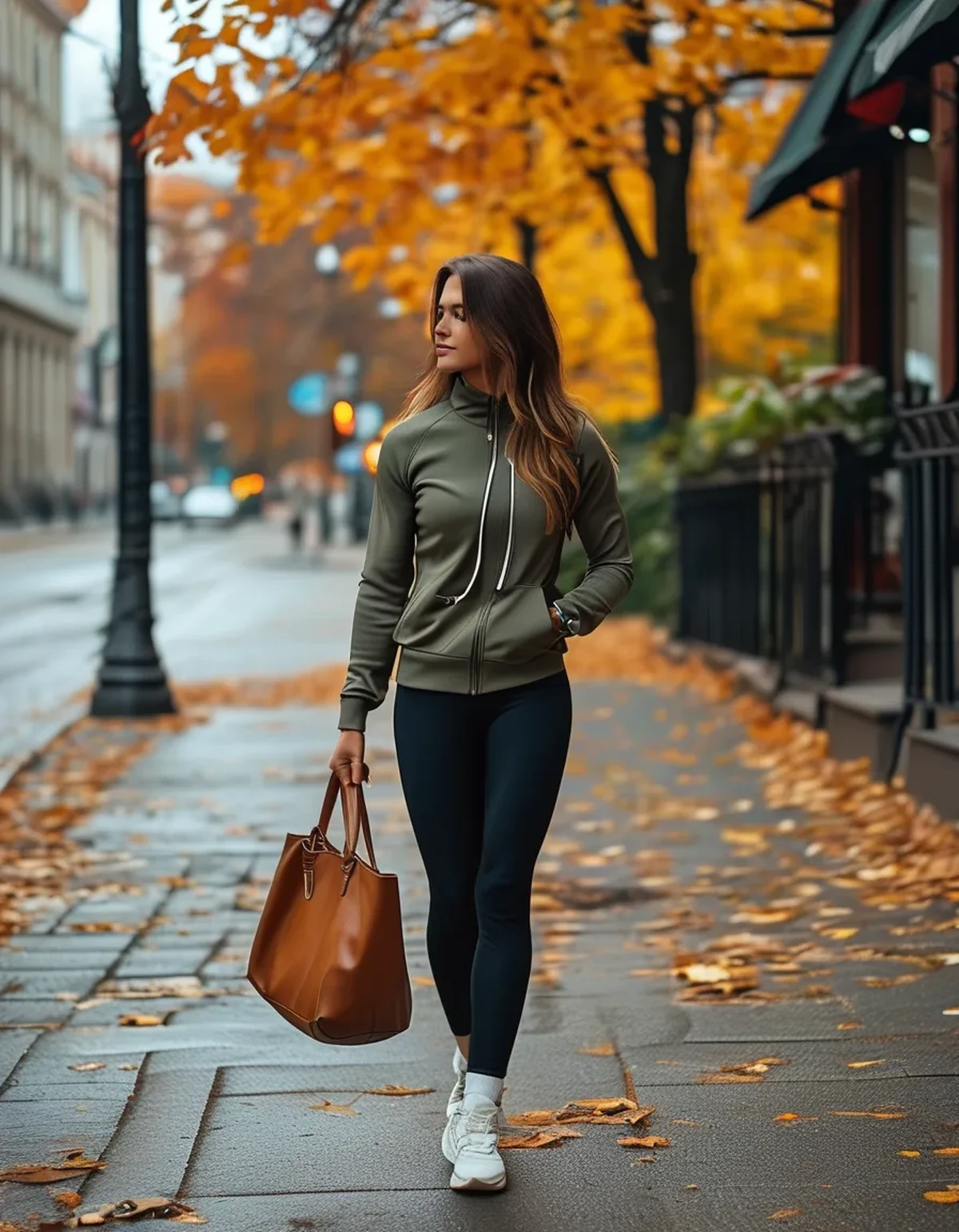
Why does the bag carry so much weight in the look?
Because of size, position, and signal.
Start with size. A gym holdall is often the largest single item in the outfit, larger in visual area than a jacket. Whatever it says, it says loudly.
Then position. You carry it at hip or shoulder height, which is the part of the silhouette people read first when you are moving. It sits exactly where the eye already is.
And then signal, which is the real issue. Most bags are unambiguous about what they are for. A nylon duffel with a sports logo is gym equipment. A structured tote is not. There is very little in between, and the eye categorises the whole outfit based on the least ambiguous item in it.
This is why the studio-to-street problem so often survives a complete wardrobe overhaul. You can put a beautifully cut trouser-weight legging under a wool-blend layer and finish it with a leather trainer, and one nylon holdall will tell everyone you have just come from a class.
The reverse also works, which is the useful part. A genuinely sporty outfit carried in a well-made structured bag reads as a considered outfit that happens to be comfortable.
What makes a bag read as street rather than studio?
Four things, roughly in order of how much they matter.
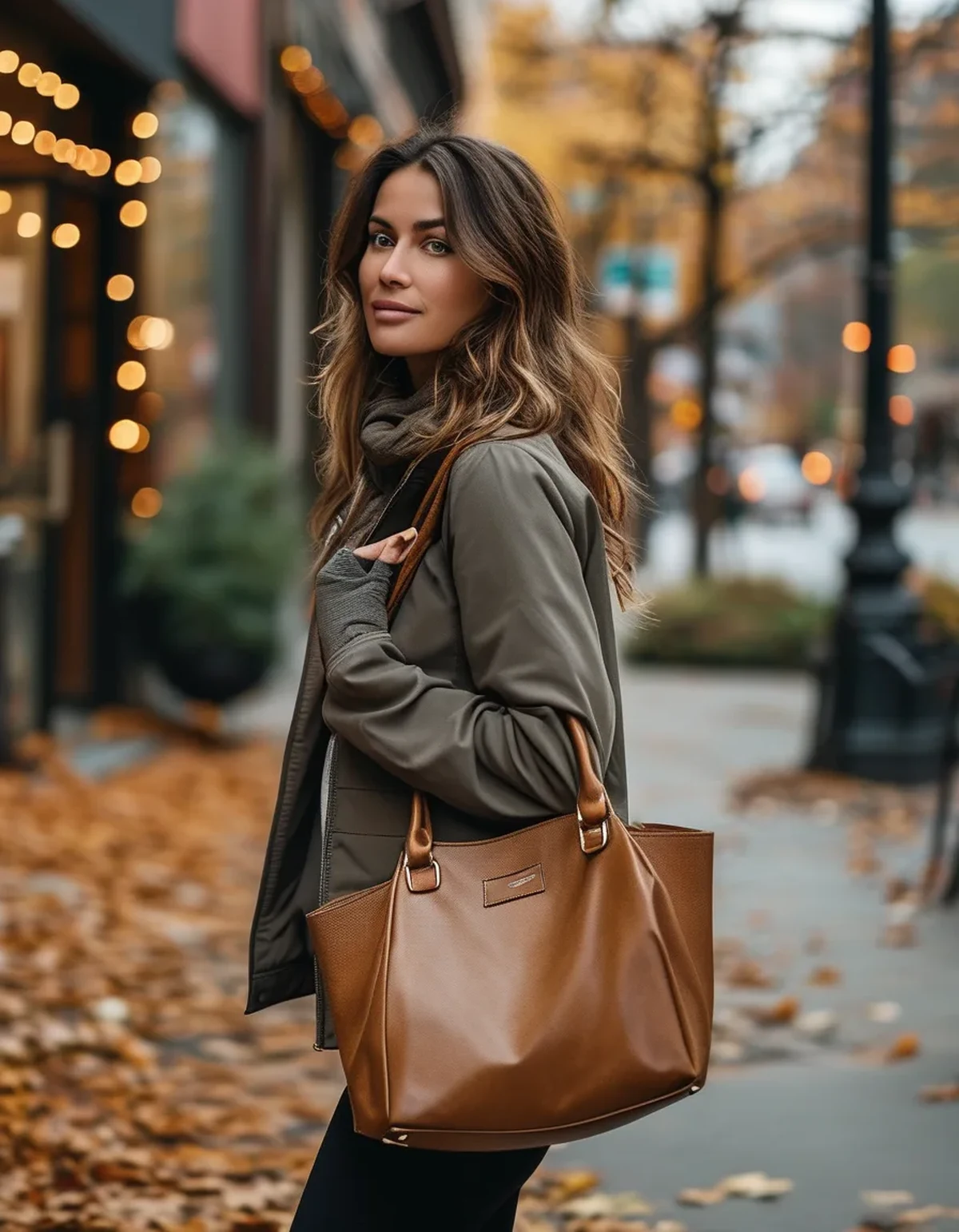
Structure. A bag that holds its shape when empty reads as a bag you chose. A bag that collapses into a heap reads as a bag you needed. This is the single biggest factor and it is more important than material.
Material. Leather and coated canvas read street. Matte technical nylon can go either way and usually works if it is structured. Shiny ripstop with contrast piping does not.
Hardware and branding. A large logo on a bag is doing category work, not brand work - it tells people what the bag is for. Small or absent branding removes that signal entirely.
Carry position. A shoulder or hand carry reads as street. A cross-body strap on a large sports bag reads as transit to a class, largely because of what it does to the line of your torso. A backpack is neutral and depends entirely on the backpack.
Colour matters less than people expect. Black, brown, cream, and deep autumn tones all work; what stops a bag from working is almost always structure or branding rather than colour.
Myth vs Fact: Bags and Activewear
Myth: You need a dedicated expensive bag for this. Fact: You need a structured one. A stiff canvas tote costs very little and outperforms a soft designer duffel for this specific job, because structure is doing the work rather than price.
Myth: A backpack always reads sporty. Fact: A leather or waxed-canvas backpack reads perfectly street. A technical hiking pack with straps hanging off it does not. The category is not the problem, the finish is.
Myth: The bag has to match your shoes. Fact: This is old advice and it constrains you for no benefit. Matching the bag to the outer layer or to the hardware on your outfit is a far more useful anchor, and matching nothing at all is fine if the bag is well made.
Myth: A big tote fits everything a holdall does. Fact: Sometimes, but wet kit is the sticking point. A good tote plus a separate waterproof pouch for damp things solves it and keeps the tote usable for the rest of the day. This is the actual practical fix and almost nobody does it.
Myth: Nobody notices bags. Fact: Bags are one of the first things people register about an outfit, ahead of tops and often ahead of shoes. It is precisely because they are functional that they carry so much information.
How do you build a bag that works both ways?
The trick is to stop asking one compartment to hold two categories of thing.
Choose one structured bag as the outer container. Leather tote, waxed canvas carryall, or a matte technical bag with a defined shape. This is the bag people see.
Put the studio inside it in pouches. A waterproof zip pouch for damp kit, a small pouch for toiletries, a shoe bag for trainers. This is the whole system, and it takes about ten minutes to set up once.
Keep the shoe bag genuinely separate. Shoes are the thing that makes a bag smell and the thing that dictates size. A drawstring shoe bag means the main compartment stays clean and the bag stays usable when you go straight from the studio to somewhere else.
Size it to the day, not to the maximum. Most people carry a bag sized for their heaviest gym day every single day. A tote that fits a folded layer, a pouch, and a water bottle covers eighty percent of sessions, and the big holdall comes out for the days that need it.
For autumn, add one thing: room for the outer layer. From September onwards you leave in a jacket and come back too warm to wear it, and a bag with no capacity for the layer you took off is the reason people end up carrying a coat over one arm for the rest of the afternoon. That single consideration changes which bag you should buy this month.
FAQ: Studio-to-Street Bag Questions, Answered
What do I do about wet kit in a leather bag?
A proper waterproof zip pouch, not a plastic bag. It costs very little, it fully solves the problem, and it also stops damp kit sitting against everything else while you go about your day.
Is a branded bag ever fine?
Small discreet branding is fine anywhere. Large logo panels are what read as sports equipment. If you love the bag, a lot of the effect can be reduced simply by carrying it in the hand rather than across the body.
One bag or two?
One, with pouches inside, for almost everyone. Two bags creates a carrying problem and looks like transit. The exception is a proper training day with shoes, a change of clothes, and equipment, where a second bag is honest and no styling will hide it anyway.
TL;DR:
- The bag is the largest and least ambiguous item in a studio-to-street outfit, so it categorises everything else.
- Structure matters more than material or price, and large logos are what read as sports equipment.
- Use one structured outer bag with pouches inside - especially a waterproof pouch for damp kit and a separate shoe bag.
- From autumn onwards, size the bag for the jacket you will take off, not for the kit you carry.
If the outfit keeps almost working, stop editing the clothes. Swap the bag for something that holds its own shape and see how much of the problem was never about what you were wearing.
See It in Motion
Seen here: High Waist Embossed Yoga Leggings with Side Pockets — shop it on bubblelime.com
Keep Reading
This article is for general informational and styling purposes only. Fit, sizing, and product availability may vary.