The One Layer That Makes Workout Clothes Read as an Outfit

Quick Answer: The layer that converts activewear into an outfit needs three properties: structure (it holds a shape rather than clinging), a hem that hits below the hip, and a non-technical fabric. A soft zip hoodie has none of these, which is why it reads as gym clothes. An unstructured wool-blend overshirt, a longline knit cardigan, or a soft blazer all have all three.
You change nothing but the third piece and the entire look shifts from “came from the gym” to “has plans.” That’s not styling mysticism — the three variables are identifiable and you can check them on anything in your closet.
Why does a layer change the whole look?
Because it changes the silhouette, and silhouette is what the eye reads first.
Activewear is close-fitting by design. Leggings and a fitted top produce an unbroken body-hugging line from shoulder to ankle. That silhouette reads as functional clothing because functional clothing is the main place it appears.
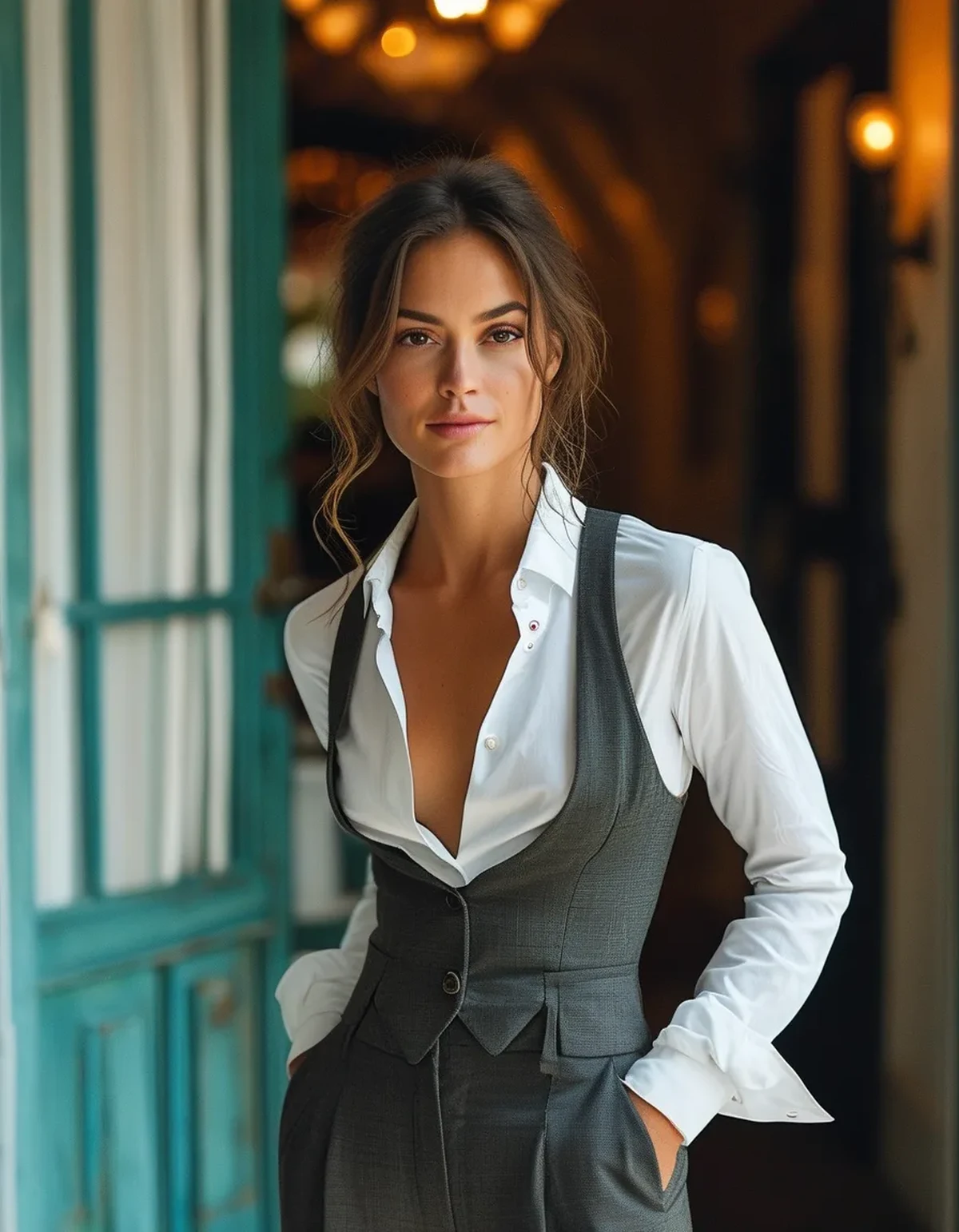
A structured layer breaks that line. It adds volume at the torso, creates a shoulder line, and introduces a horizontal break at the hem. Those three changes move the outfit into the same silhouette family as normal daywear.
A soft zip hoodie doesn’t do this because it clings to the same line it’s covering. It adds a layer without adding structure, so the silhouette stays the same and the read stays the same.
This also explains why an oversized sweatshirt sometimes works — if it’s genuinely oversized, it creates volume and a hem break, which are two of the three properties. It’s usually the fabric that lets it down.
What makes a layer work: the three-property test
Check any piece against these before it earns a place in the rotation.
1. Structure. Does it hold its shape when you hold it up, or does it collapse? A wool-blend overshirt, a denim jacket, a soft blazer, a heavy knit cardigan — all hold. Jersey, French terry, and thin fleece don’t. Structure is what creates a shoulder line, and a shoulder line is the strongest single signal of intentional dressing.
2. Hem below the hip. A cropped layer over leggings emphasizes the leggings. A layer hitting mid-hip or lower creates a break and shifts proportion. Longline is the safest choice — anything from hip to mid-thigh.
3. Non-technical fabric. This is the one people miss. Technical fabrics have a recognizable sheen and hand-feel, and putting a performance shell over performance leggings compounds the gym read. Wool, cotton, linen blends, denim, and matte synthetics all break the pattern.
The single best category by this test is the unstructured overshirt — a shirt-jacket in wool blend, heavy cotton, or corduroy. It has structure without formality, sits at the hip, and reads as daywear from any distance.
Runner-up: a longline cardigan in a substantial knit. Third: a soft, unlined blazer.
What Nobody Tells You About Studio-to-Street Dressing
Shoes carry more weight than the layer. Running shoes signal the gym louder than anything else in the outfit. A clean minimal sneaker, a loafer, or a boot changes the read instantly — often more than the third piece does. If you can only change one thing, change the shoes.
Bag choice is the second strongest signal. A gym duffel undoes everything above it. A structured tote or a small crossbody costs nothing to swap and does a disproportionate amount of work.
Matching your leggings to your layer is a downgrade, not an upgrade. Head-to-toe matching in the same tone reads as a set, and sets read as uniform. Contrast between the base and the layer is what makes it look assembled rather than issued.
Fabric sheen is the giveaway at a distance. People can’t identify the fabric across a room but they register the shine. Matte finishes read as clothing, glossy finishes read as sportswear.
Hair and one accessory close the gap. A change from a workout ponytail plus one deliberate accessory — earrings, a watch, a scarf — completes the transition more than another garment would.
The best pieces are usually not from activewear brands. The properties you need are structure and non-technical fabric, which is exactly what performance brands are engineered away from.

How do you build a small transition kit?
Three pieces you keep by the door or in the car, and the whole problem is solved.
One overshirt or longline cardigan in a neutral that goes with everything you train in. Charcoal, camel, cream, or olive.
One pair of non-athletic shoes — a minimal leather sneaker is the most versatile, a loafer or ankle boot if the season suits.
One bag that isn’t a gym bag. Large enough for the shoes and the layer.
Optional fourth: a scarf or a pair of earrings kept in the bag, weighing nothing.
The color rule that makes it effortless: train in solid neutrals — black, navy, charcoal, or olive — rather than prints and color-blocked panels. Solid activewear takes any layer. Panelled, logo-heavy, or brightly color-blocked activewear only works under a very short list of things.
That’s the whole system. It fits in a tote, it costs whatever you decide to spend, and it means the difference between going home to change and going straight on.
What should you actually avoid?
A short list, and each has a specific reason.
Zip-front technical jackets. Same silhouette as what’s underneath, same fabric family, plus visible zippers and reflective details that only exist for sport.
Cropped layers over leggings. They shorten the torso and lengthen the leg line, which emphasizes exactly the proportion you’re trying to break up.
Full matching sets in performance fabric. They look excellent in the studio and unmistakably like uniform outside it.
Visible large logos on more than one item. One is fine and reads as normal. Two or more reads as sponsorship.
Anything with a strong sheen head to toe. The combination of glossy leggings, glossy top, and glossy jacket is the most identifiable gym-clothes signal there is.
And one non-rule: none of this means leggings can’t be worn out. They obviously can, and the entire premise is that they can. It just means the surrounding pieces are doing the work of moving the outfit out of one category and into another — which takes about ninety seconds and three items you already own.
FAQ: Studio to Street Questions, Answered
Do I need to change out of leggings for dinner?
Not if the rest reads as intentional. Structured layer, non-athletic shoes, one accessory. What makes leggings read as gym clothes is the company they keep, not the leggings.
What’s the single highest-impact swap?
Shoes. If you change one thing between the studio and the street, change the footwear. It shifts the read more than any top or jacket.
Does this work for a jumpsuit or a unitard?
Better, in fact — a one-piece already reads as a garment rather than a kit. It needs the same three-property layer, and the shoe rule applies identically.
TL;DR:
- The right layer has three properties: structure, a hem below the hip, and non-technical fabric.
- Unstructured overshirts and longline cardigans are the most reliable category.
- Shoes and bag carry more signal than the layer itself — swap those first.
- Train in solid neutrals so anything layers over them.
Keep an overshirt, a pair of real shoes, and a non-gym bag by the door. The transition costs ninety seconds and it’s the difference between going home first and just going.
See It in Motion
Seen here: Super High Waist Embossed Yoga Leggings with Inner Pocket — shop it on bubblelime.com
Keep Reading
This article is for general informational and styling purposes only. Fit, sizing, and product availability may vary.