Why Carrying Two Separate Bags Defeats the Entire Point of a Studio-to-Street Outfit

Quick Answer: A studio-to-street outfit can look completely seamless and still fail the moment two separate bags — a gym tote and a going-out bag — get juggled at the exit, since the visual effect of effortless transition depends on carrying one cohesive item the whole time, not just the clothing changing smoothly.
The outfit transition is flawless. Then there’s an awkward shuffle at the studio door, swapping a gym tote for a going-out bag, and the whole effortless effect quietly evaporates.

Why does the bag specifically undo an otherwise seamless outfit transition?
The studio-to-street concept relies on a single continuous look reading as intentional from start to finish, and a bag swap at the exact transition point breaks that continuity visually — even if the clothing itself transitions perfectly, two bags signal “two different outfits stitched together” rather than one cohesive one, which undercuts the whole premise of the styling approach.
Is a gym tote genuinely incompatible with a polished street look, or is it about the specific bag?
It’s specifically about bulk and material mismatch, not totes as a category — an oversized, sporty-branded gym tote clashes visually with an elevated street outfit, but a structured tote in a neutral material or color can function as both a gym bag and a legitimate street-ready accessory without needing to be swapped at all.
What actually makes one bag work for both the studio and the street?
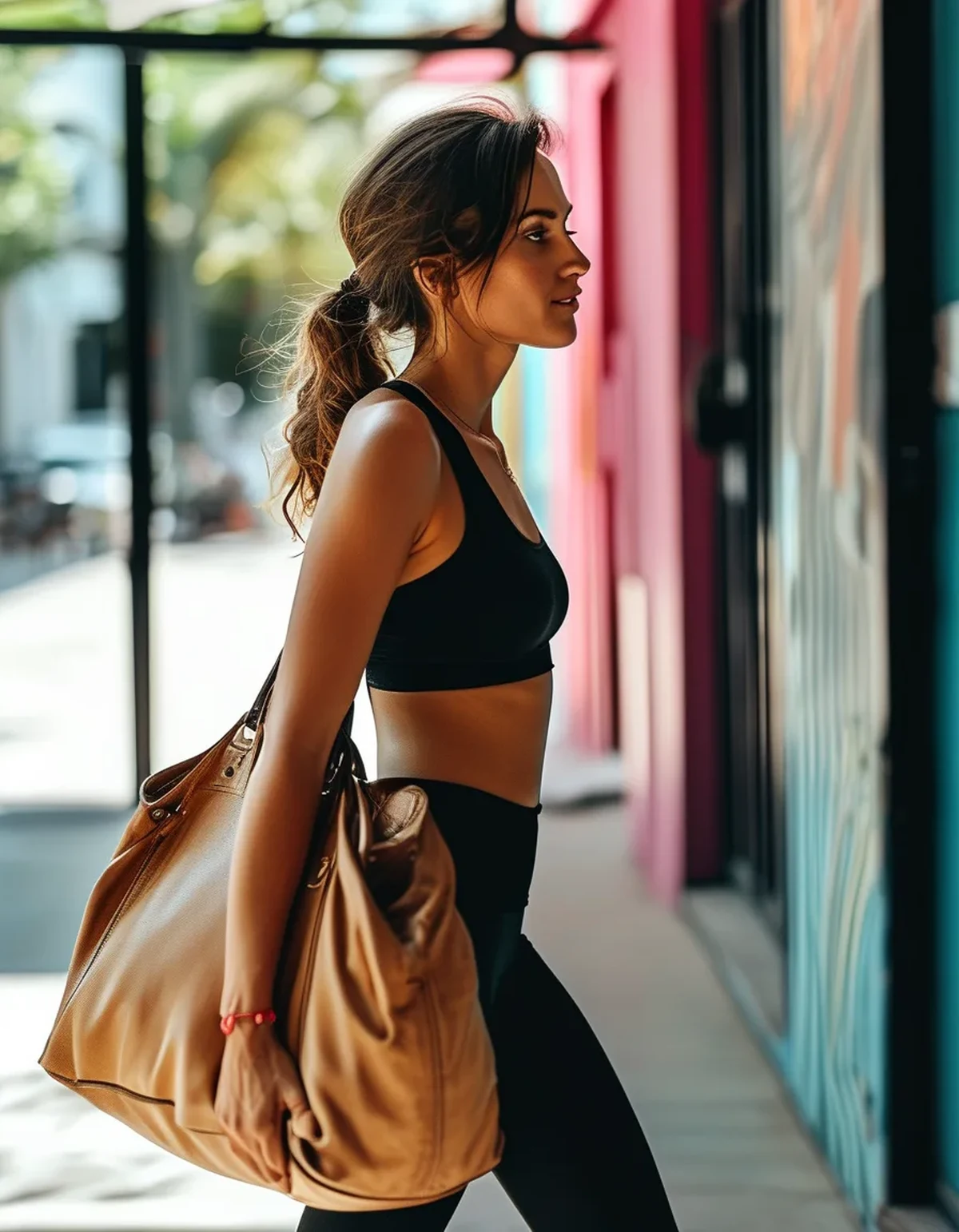
A bag with enough interior capacity for gym essentials (shoes, a water bottle, a change of layers) but a silhouette and material that reads as an intentional accessory rather than pure gear — structured totes, crossbody bags with a sport-adjacent but clean design, or a backpack in a refined material all commonly bridge both contexts without a swap.
Does this one-swap-formula philosophy already used elsewhere in studio-to-street styling apply the same way to bags?
Yes, directly — the same one-swap logic already used for outfit pieces (changing one item, not the whole look, to transition contexts) applies just as cleanly to the bag, treating it as one more piece in the transition formula rather than a separate logistical problem solved outside the outfit planning.
Is it ever worth carrying two bags anyway, despite the visual tradeoff?
For genuinely heavy gym needs — multiple clothing changes, larger equipment, food prep containers — a second bag is sometimes unavoidable, but treating it as a deliberate exception for specific heavy-gear days, rather than a daily default, keeps the one-bag approach as the norm most of the time.
FAQ: Studio-to-Street Bag Strategy, Answered
Does bag color matter as much as shape for versatility?
Yes — neutral, versatile colors (black, tan, olive) transition between gym and street contexts more easily than bright, sport-specific branded colorways that read as purely athletic.
Is a backpack a good one-bag option, or does it read too casual for street looks?
A structured or minimalist backpack in a refined material can absolutely work; the sportier, mesh-heavy backpack styles are the ones that tend to read as gym-only.
How much capacity is actually needed for a true one-bag setup?
Enough for a folded change of top, shoes, and a small toiletry pouch generally covers most single-session studio-to-street needs without requiring an oversized bag that undermines the polished look.
TL;DR:
- A bag swap at the studio exit breaks the visual continuity the whole outfit transition relies on
- It’s bulk and branding mismatch that clashes, not totes as a bag category generally
- A structured, neutral-material bag can function for both gym and street without swapping
- The same one-swap outfit logic applies directly to bag choice, not just clothing
- Two bags is a reasonable exception for heavy-gear days, not a necessary daily default
One bag, chosen deliberately, finishes the transition the outfit already started.
Keep Reading
This article is for general informational and styling purposes only. Fit, sizing, and product availability may vary.