Why the Bag Decides Whether Activewear Reads as an Outfit

Quick Answer: Clothes describe what you are wearing; accessories declare what you are doing. A technical duffel over leggings says in transit between workouts, and every observer reads it that instant — while a structured tote or a neat crossbody over the identical outfit says this is what I am wearing today, on purpose. The contrast is the mechanism: one polished, non technical object next to athletic fabric reads as intention, and intention is the entire difference between activewear and an athleisure outfit. It is also the cheapest conversion in fashion — the clothes stay the same and one swap at the door changes the sentence.
The leggings are the words. The bag is the punctuation.
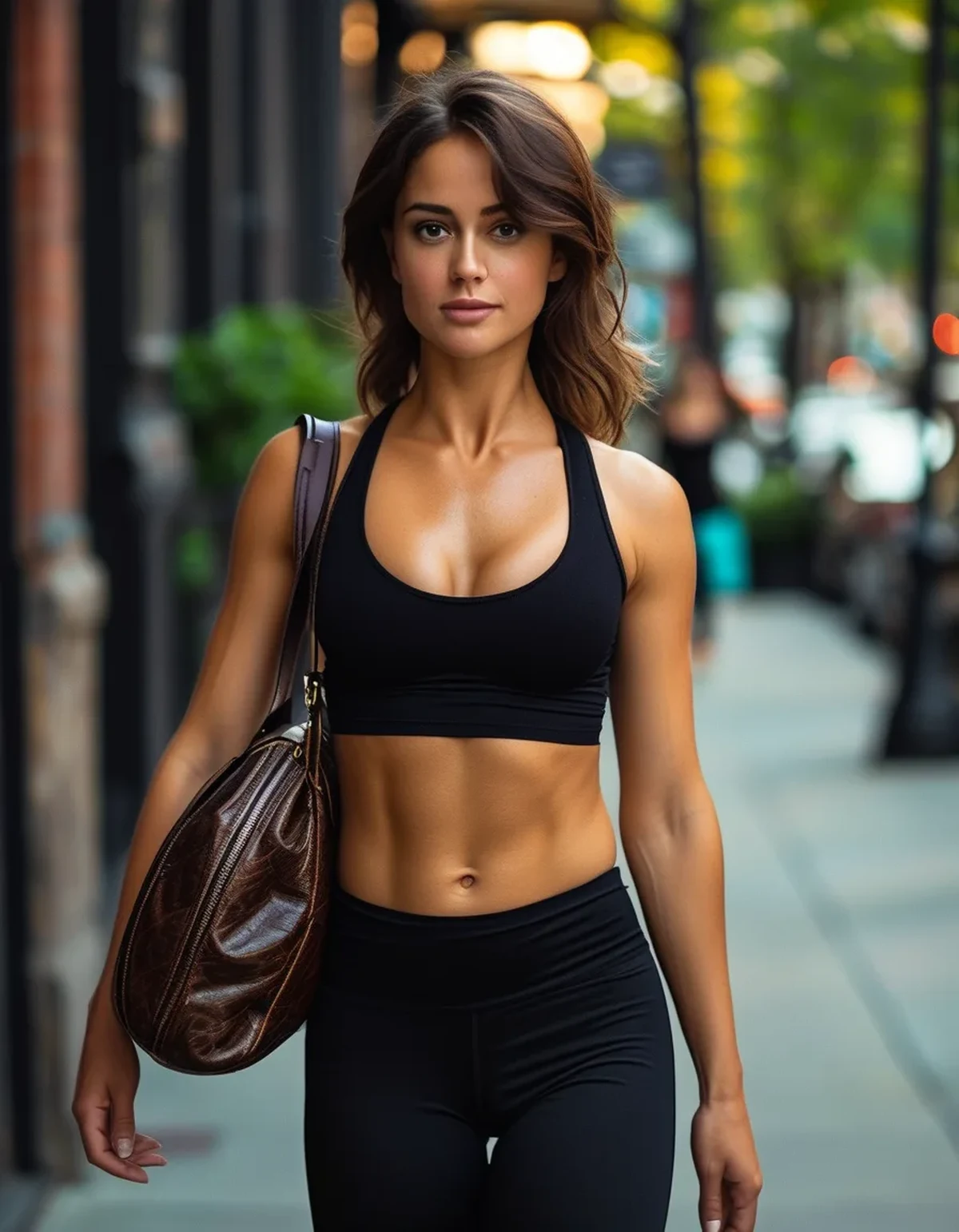
Why does the bag out-signal the clothes?
Because observers read intent before they read items, and the bag is where intent is legible.
Activewear is ambiguous on purpose — the same buttery-soft leggings and fitted top serve the class, the commute, and the coffee equally well. Ambiguous clothes make the accessories the tiebreaker: everything around the outfit gets scanned for the answer to one subconscious question — is this athletic gear in use, or an outfit?
The duffel answers instantly and unhelpfully. A technical gym bag — logo straps, mesh pockets, shoe compartment — is single purpose equipment, and equipment says the workout is the story. The whole look files itself under between places.
A structured bag answers the other way. Leather or clean canvas, holding its shape, hardware instead of drawstrings — it belongs to lunch, to errands done well, to a day planned rather than survived. Set that object against athletic fabric and the contrast does the styling: polish next to sport reads as deliberate, the same principle that makes sneakers with a blazer work. One element from the other register, and the outfit becomes a choice.
Run the one swap test mentally: photograph the same person in the same legging outfit twice, duffel versus structured tote. The first reads locker room adjacent; the second reads off duty put together. Nothing on the body changed.
Which is why the bag is the highest leverage item in the whole studio to street question — jackets and shoes cost real money to swap, while the bag conversion is one object, already owned, waiting by the door.
Which bags convert the outfit, and which sink it?
The converters share two traits — structure and non technical materials — and the sinkers share their opposites.
The structured tote is the workhorse. Leather, sturdy canvas, or a good faux — it holds its shape empty, swallows a laptop and a water bottle, and instantly dresses leggings into an errands done properly outfit. Neutral colors carry the polish; a deep tan or black against monochrome activewear is the easiest win in the category.
The small crossbody is the minimalist convert. Phone, card, keys, lip balm — worn over a matching set or leggings and a long layer, it says the day is light and intentional. It is also the correct answer for actually walking anywhere, leaving both hands free for the coffee and the dog.
The belt bag is the borderline case that styling decides. Worn crossbody over a fitted top under an open shirt, it reads current and deliberate; clipped around the waist over a technical jacket, it drifts back toward trailhead. The material tips it — leather and smooth finishes convert, ripstop nylon with logo webbing does not.
The sinkers: the drawstring cinch sack, the shoe visible mesh duffel, the climbing brand backpack with carabiner still attached, and anything dripping technical webbing. All excellent equipment, all announcing gym in progress louder than any legging can counter.
Two refinements finish the conversion: echo one color between bag and outfit — black bag with black leggings, tan bag with an oatmeal set — so the whole reads composed; and let hardware match the register, gold or silver tones lifting the outfit the way zipper pulls and clips cannot.
None of this requires the expensive version. Structure and material discipline convert at every price point — the charity shop leather tote outperforms the three hundred dollar technical duffel at this one job every single time.
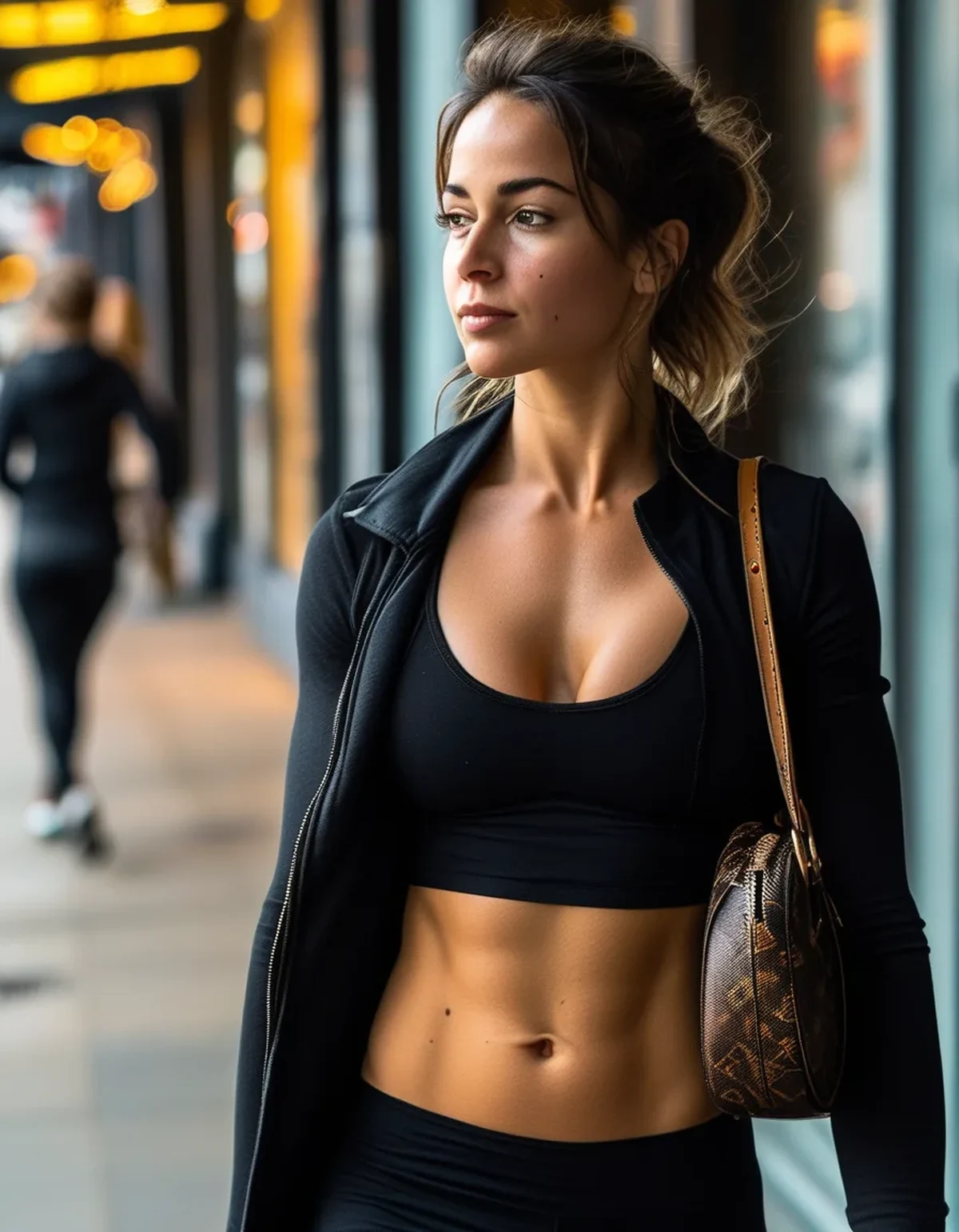
How do you run the two bag system on real studio days?
The conversion has a logistics problem — sweaty gear exists — and the answer is a bag inside a bag, not a compromise bag.
The pouch system is the whole trick. A zip pouch or lightweight packable duffel lives inside the structured tote, holding the workout’s aftermath: damp top, grip socks, the sports bra that did its job. Sweat and the good bag never meet; the tote arrives at the class, the coffee, and the desk unbothered. A wet bag from the swim aisle does it for a few dollars, and a rolled packable duffel handles bigger loads — shoes included — while flattening to nothing when empty.
The car runs the annex. Anyone driving to class can park the true gym kit — mat, towel, shower things — in a trunk duffel permanently, and walk in carrying only the tote with the pouch. The locker room sees a curated bag; the trunk holds the warehouse.
The reverse day works identically. Office to evening class: laptop and tote all day, pouch of workout clothes inside, duffel-free transformation in the changing room at 5:45.
And the minimalist exit beats every bag some days: phone, card, keys in a leggings pocket, layer tied at the waist, nothing carried at all. The no bag look over a matching set is its own statement of intention — the pocket was the bag.
The pattern underneath all of it: separate the outfit’s bag from the workout’s storage, and stop asking one object to be both. Every hybrid gym-bag-that-looks-nice compromise does each job at seventy percent; the tote plus pouch does both at full strength for less money.
The deciding test for any bag by the door remains one question: would this bag make sense at lunch with no workout in the story? Yes converts. No stays home.
What Nobody Tells You About the Studio to Street Swap
The bag out-ranks the shoes, and it is cheaper to fix. Shoe swaps get all the athleisure advice, but observers clock the carried object first — it sits at eye line and moves with you. The tote conversion costs nothing if a structured bag already exists in the closet; the equivalent shoe upgrade rarely does.
Studio cubbies vote for totes. Open shelving at boutique studios was designed around structured bags standing upright — the duffel slumps, spills, and occupies two slots. The conversion is also, quietly, better locker room logistics.
Hardware ages faster than fabric. A good bag with corroded zips or fraying straps reads more tired than old leggings ever do, because it sits at inspection height. The five minute strap and hardware wipe down is the highest return maintenance in the outfit.
Season shifts the material calendar. Late summer still belongs to canvas and straw totes over bike shorts and light sets — but the window is closing: come the first weeks of fall, straw reads out of season overnight, and the leather and suede finishes take over exactly as leggings shift to their darker, heavier fall weights. The bag transition and the legging transition land the same week, which makes early September the natural moment to audit both.
One good neutral beats four novelty bags. The conversion depends on structure and material, not variety — the single tan or black structured tote converts every activewear outfit in the drawer, which is the whole capsule argument in one object.
And the coffee shop is the real runway. The studio to street question is decided in the fifteen minutes after class — the latte line, the sidewalk, the school pickup. Dressing for that quarter hour, not for the mirror at home, is what the bag swap actually optimizes.
FAQ: Activewear Bag Questions, Answered
Do I really need to spend a lot on the converting bag?
No — the conversion runs on shape and material category, not price. A structured faux leather tote under fifty dollars converts identically to its luxury cousin at ten paces. Spend where you like; the mechanism is free.
What about backpacks — can they ever convert?
Structured, minimal ones in leather or smooth finishes can, especially over monochrome sets — the sink risk is technical fabric and visible gear loops, not the format itself. If it would pass at a casual office, it passes over yoga pants.
How do I carry a yoga mat without wrecking the look?
A simple strap sling or a clean mat carrier keeps hands free and reads intentional — the mat itself is neutral; it is the mesh duffel around it that sinks outfits. Mat on the shoulder, structured tote in hand is a fully converted studio look.
Is a designer gym duffel the best of both worlds?
It is a nicer duffel — the format still says equipment, whatever the logo. If the goal is the outfit reading dressed, structure beats branding: the mid priced tote converts what the luxury duffel cannot.
TL;DR:
- Ambiguous activewear makes the bag the tiebreaker: technical duffels say mid workout, structured totes and crossbodies say dressed on purpose.
- Convert with structure and non technical materials — leather or clean canvas, one echoed color, hardware over drawstrings.
- Run the two bag system: a zip pouch for sweaty gear inside the good tote, the car as the annex, and the pocket as the bag on minimalist days.
- The lunch test decides any bag by the door, and early September is the natural week to swap straw for leather as the leggings go dark for fall.
Tomorrow, carry the class outfit under the most structured bag you own and count how differently the coffee line treats the exact same leggings. The clothes were never the problem.
See It in Motion
Seen here: High Waist Yoga Leggings with Inner Pocket — shop it on bubblelime.com
Keep Reading
This article is for general informational and styling purposes only. Fit, sizing, and product availability may vary.