Why the Studio-to-Street Outfit Fails at the Supermarket

Quick Answer: Supermarkets combine harsh overhead fluorescent lighting, a long stationary duration, and a context where everyone else is in ordinary clothes. Studio-to-street outfits are built for movement, flattering light and short exposure. Fixing it comes down to three things: a structured top layer, a non-athletic shoe, and a bag that is not a gym bag.
You felt entirely fine walking there. Ten minutes into the aisles you felt like you were in your gym kit in public.
That is not self-consciousness inventing a problem. The environment genuinely changed how the outfit reads.
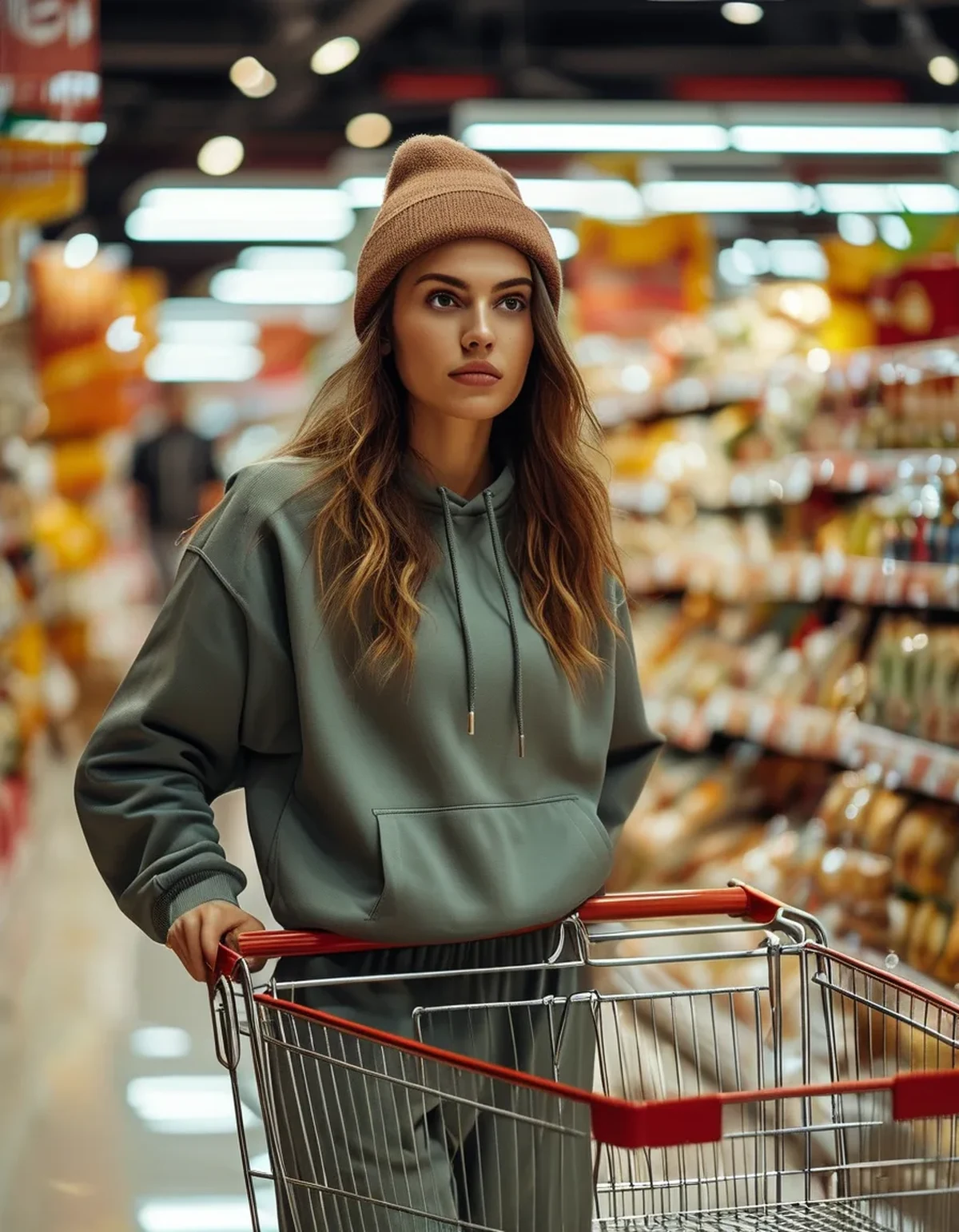
Why does the lighting matter so much?
Because supermarket lighting is the least forgiving light most people encounter.
High-output overhead fluorescent and LED lighting is designed to make produce look appealing, which means high intensity and high colour rendering from directly above. Two things follow.
Technical fabrics look technical under it. The sheen on performance fabric that reads as sleek in daylight or a studio reads as shiny and synthetic under overhead fluorescents. Matte fabrics hold up far better.
Everything is more visible. Sweat marks, fabric texture, sheerness under stretch, and the difference between a garment designed for exercise and one designed for wearing. Bright directional light from above reveals all of it.
This is the same reason changing room lighting has such a poor reputation — strong overhead light is unflattering on both fabric and body, and shops with better lighting design deliberately soften it. Supermarkets do not, because the lighting is optimised for the products.
Practical consequence: matte fabrics and darker colours perform much better in that environment, and anything with a sheen — most compressive leggings, most performance jackets — reads more athletic than it does anywhere else.
Why does duration change how it reads?
Because activewear reads as purposeful in motion and as clothing when stationary.
Walking down a street in activewear, you are visibly going somewhere. The outfit has an explanation — it reads as en route to or from something, and nobody thinks about it including you.
Standing in front of a shelf comparing two products for ninety seconds, that explanation disappears. You are stationary in a place where nobody exercises, in clothes designed for exercising.
Twenty minutes is long enough for the context to reassert itself. This is why the same outfit is comfortable on a walk and awkward in a shop, and why it is fine in a coffee shop for ten minutes and less fine for an hour.
There is also a comfort factor. Compressive activewear is designed for movement, and standing still in it for extended periods is genuinely less comfortable — waistbands feel tighter, and fabric that felt supportive while moving feels restrictive when you are not.
The fix is not to avoid supermarkets in activewear. It is to make the outfit read as clothes rather than as kit, which is a matter of three specific items.
What are the three items that fix it?
Consistent across almost every version of this problem.
1. A structured top layer. Not a hoodie, not a performance jacket. Something with structure and a non-athletic fabric — a denim jacket, an overshirt, a wool-blend blazer, a longline knit cardigan, a trench. This is the item that does most of the work, because a structured shoulder signals clothing more strongly than anything else in an outfit.
2. A non-athletic shoe. The second-strongest signal. Chunky running shoes read as gym; a clean leather sneaker, a loafer, a flat ankle boot or a low chelsea boot read as an outfit. This is the change most people resist and it produces the biggest single shift.
3. A bag that is not a gym bag. A tote, a crossbody, a structured shopper. A drawstring or a branded sports holdall places the whole outfit firmly in one category regardless of what else you are wearing.
Change all three and the leggings underneath stop being the defining element. Change none of them and no quality of legging rescues it.
A fourth, smaller lever: a piece of visible jewellery. A watch, earrings, a necklace. Small, and it signals deliberate dressing in a way that reads immediately.
Myth vs Fact: Activewear in Public
Myth: expensive activewear reads as clothing. Fact: it reads as expensive activewear. Price improves fabric quality and fit, both of which help, but the category signal comes from silhouette and styling rather than from cost. A well-styled inexpensive outfit outperforms an unstyled expensive one every time.
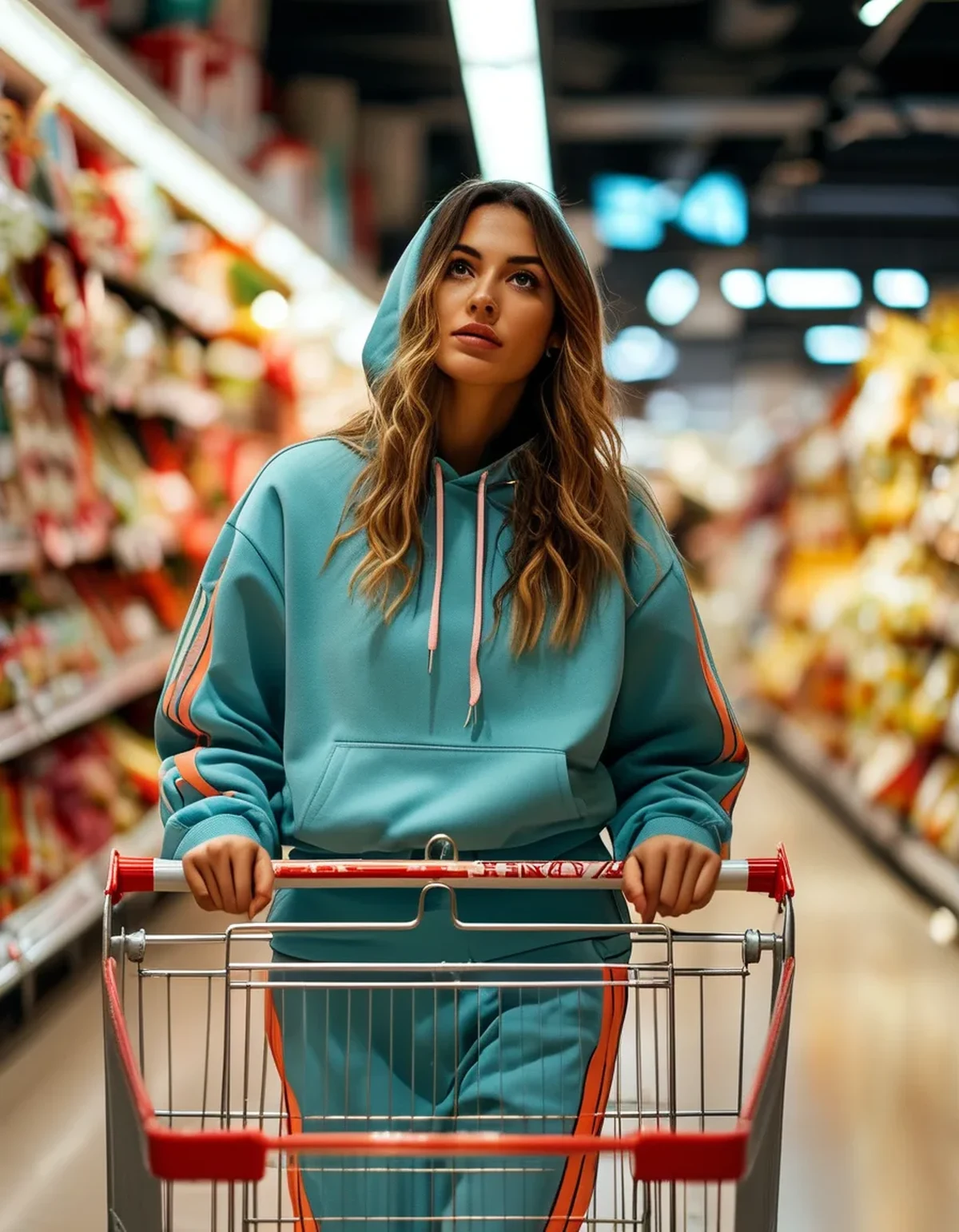
Myth: matching sets look more put together. Fact: matching sets read most strongly as a uniform, which is exactly the signal you are trying to soften. Breaking the set — activewear bottoms with a non-athletic top, or vice versa — reads as an outfit. A full matching set with trainers reads as gym kit.
Myth: nobody is looking. Fact: largely true, and not the point. The discomfort people describe is mostly internal, and the reason to address it is that feeling appropriately dressed changes how you move through the day. The outfit is being adjusted for you, not for observers.
Myth: black leggings go with anything. Fact: black leggings with black trainers and a black top produces a monochrome athletic column that reads very strongly as gym kit. Black leggings work best with contrast above — a colour, a texture, or a structured layer.
Myth: you should just change. Fact: sometimes the right answer, and often impractical. The whole premise of studio-to-street is that changing is inconvenient, and building two or three outfits that survive the transition is a better use of effort than either changing every time or feeling wrong.
How do you build outfits that survive anywhere?
Three combinations that hold up in harsh light for an hour.
The everyday version. Matte full-length leggings in a deep colour, a relaxed non-athletic top or a longline base layer, an overshirt or denim jacket, clean leather sneakers, a tote. Reads entirely as clothing, and functions perfectly for a class.
The colder version. Fleece-lined leggings, a fitted knit, a longline coat, ankle boots, a crossbody. The coat does almost all of the work here — a proper coat over activewear is one of the most reliable combinations there is.
The smarter version. Wide-leg or straight technical trousers rather than leggings, a fitted top, a blazer, loafers. Technical trousers with a proper drape are the most under-used item in this whole category, and they solve the problem at the source.
Fabric priorities: matte over sheen, thicker over thin, and structured over clingy for anything worn for extended periods in bright light.
And the single most useful principle: one athletic item, not three. Leggings plus a technical top plus trainers plus a sports jacket is a kit. Leggings plus a knit plus boots plus a coat is an outfit that happens to contain leggings. The count is what determines which one you are wearing, and it is easier to manage than any amount of shopping.
FAQ: Studio-to-Street Styling, Answered
What is the single best item to buy for this?
A structured top layer that is not athletic — an overshirt, a denim jacket, or a wool-blend blazer. It converts more outfits than anything else and works over almost any activewear base. If you already own one, a non-athletic shoe is the next purchase.
Do wide-leg technical trousers actually work for training?
For most studio classes, yes — yoga, barre, pilates and mat work are all fine, and many people prefer them. For anything with equipment, running, or a lot of floor work they are less practical. They solve the styling problem completely, so they are worth having if your training suits them.
How do I deal with sweat marks after a class?
A dry top for afterwards is the only reliable solution, and it is why a tote bag is part of the formula. Light colours, patterns and textured fabrics show marks far less than smooth dark ones, which is worth knowing when choosing what to wear rather than what to do afterwards.
TL;DR:
- Supermarket lighting is harsh, overhead and unforgiving, which makes technical fabric read as technical and reveals everything.
- Activewear reads as purposeful in motion and as kit when stationary — twenty minutes is long enough for the context to shift.
- Three items fix it: a structured non-athletic top layer, a non-athletic shoe, and a bag that is not a gym bag.
- Matte over sheen, break the matching set, and add one piece of visible jewellery.
- Keep it to one athletic item rather than three — that count decides whether it reads as an outfit or a uniform.
What makes this worth solving rather than tolerating is that the studio-to-street problem is entirely a styling problem wearing a comfort disguise. The leggings are fine. The trainers, the matching top, the sports bag and the sheen are what put the whole thing in a category, and each of those is a one-item decision made before you leave the house.
See It in Motion
Seen here: Super High Waist Embossed Yoga Leggings with Inner Pocket — shop it on bubblelime.com
Keep Reading
This article is for general informational and styling purposes only. Fit, sizing, and product availability may vary.