Why the Studio-to-Street One-Swap Formula Breaks in Cold Weather

Quick Answer: The one-swap formula assumes a single visible layer — change the top or the shoes and the outfit reads as street. In cold weather, outerwear becomes the dominant visible element, so a coat over gym clothes reads as gym clothes with a coat. The cold-weather version needs two swaps, and the coat has to be one of them, because it’s doing most of the visual work.
Your one-swap formula carried you through summer flawlessly. In October you swapped the top, put on a puffer, and still looked like you’d come from the gym.
Why does one swap stop being enough?
Because the layer that dominates the look changed, and the formula was built around a layer that’s now hidden.
In summer, the visible outfit is one or two pieces. Leggings and a top. Swap the top for something structured and the whole outfit reads differently, because you changed a large proportion of what’s visible.
In cold weather, outerwear covers 60 to 70 percent of you. The top you carefully swapped is now under a jacket and largely invisible from the front. You changed something nobody can see.
Athletic outerwear is the specific problem. A technical running jacket or a gym-brand puffer signals athletic more strongly than any base layer signals street. Whatever else you’re wearing, it’s read first.
What remains visible is the least controlled part. Below a mid-length coat: leggings and shoes. If those are the athletic elements, the visible portion of the outfit is entirely gym, and the swap was spent on the hidden portion.
The reframe
The coat is the outfit in cold weather. Any transition formula has to start there rather than treating outerwear as an add-on.
What does the cold-weather version look like?
Two swaps, with the coat mandatory as one of them, and shoes as the strong default second.
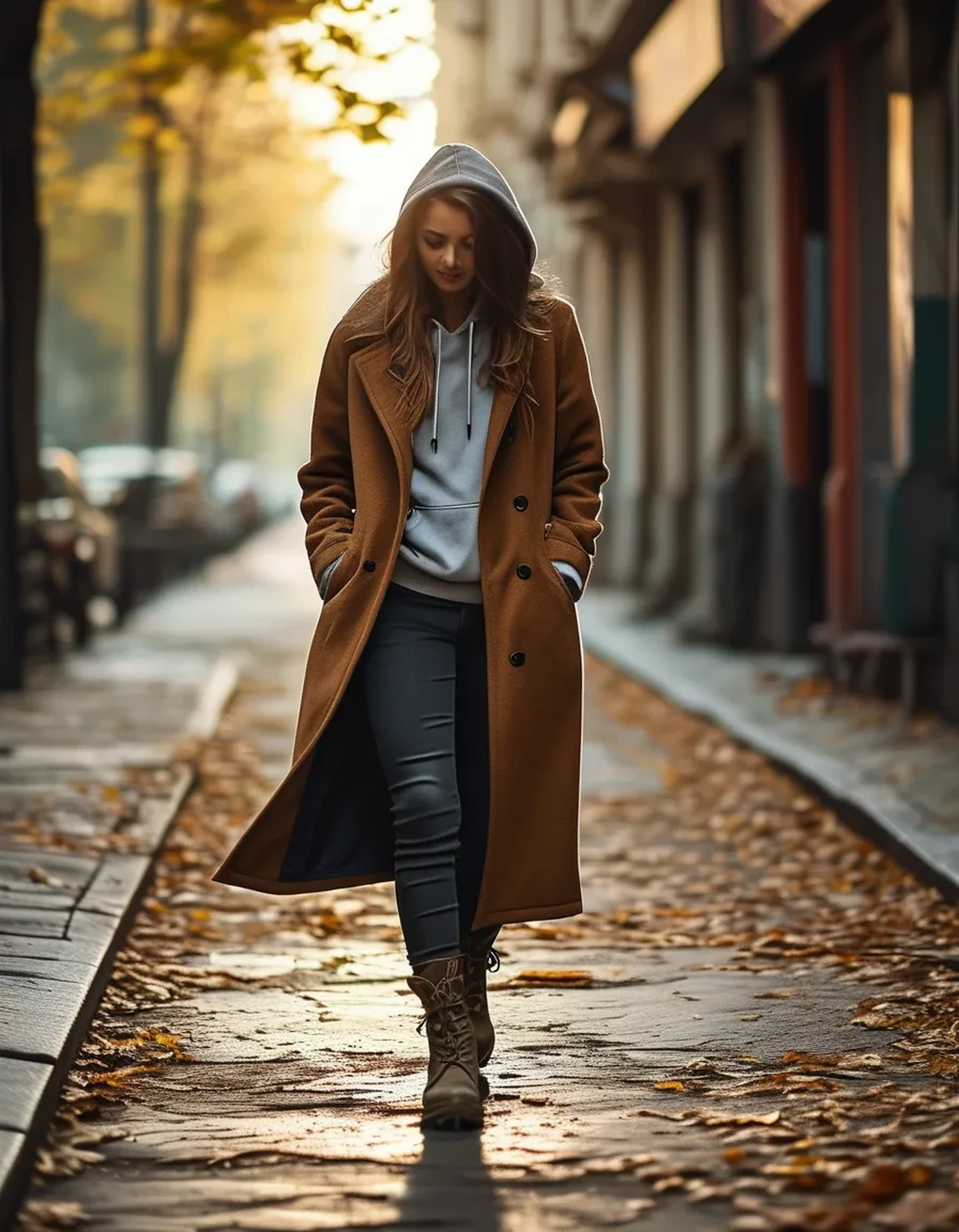
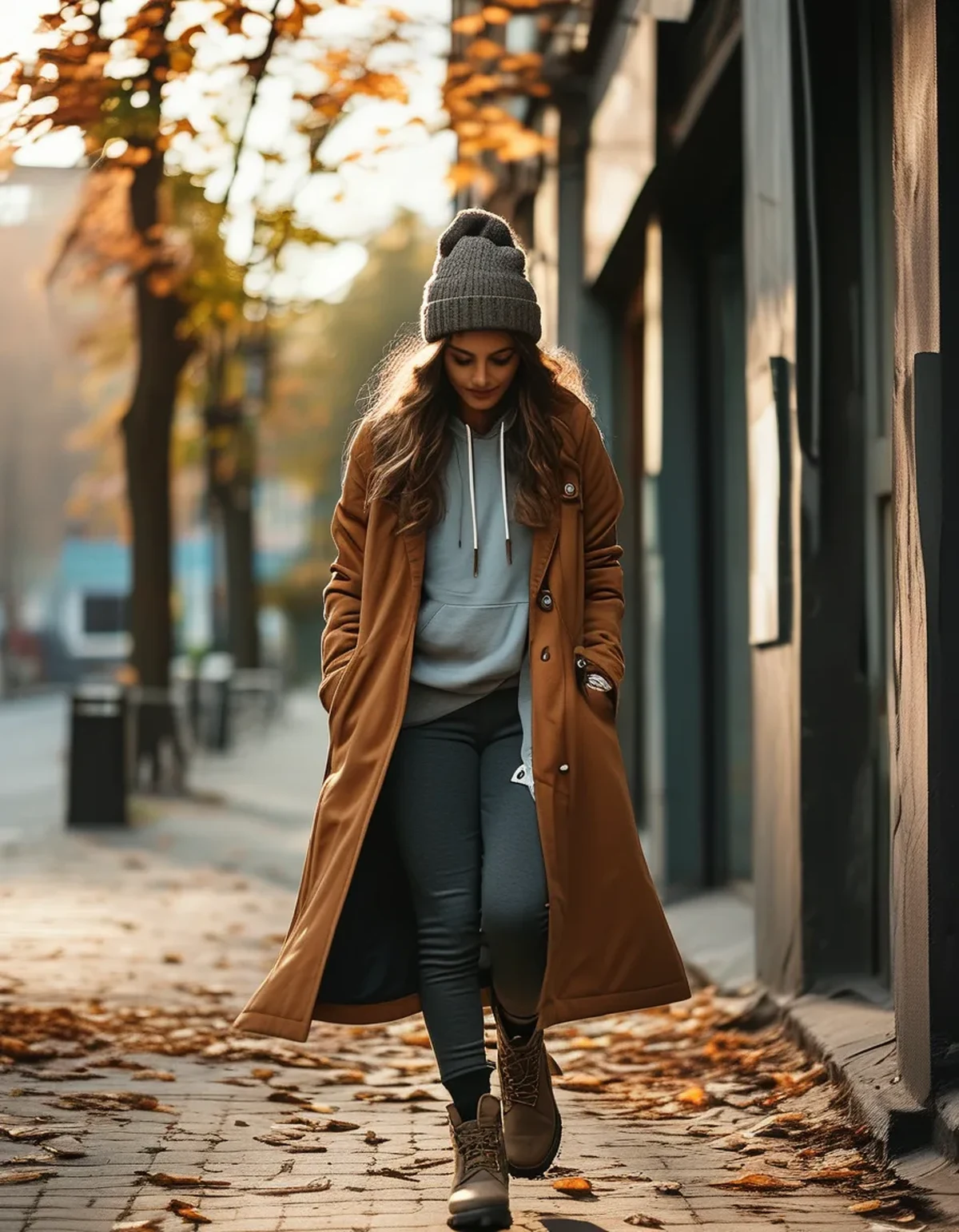
Swap 1 — outerwear, always. A wool coat, a trench, a structured overshirt, or a non-athletic puffer in a solid color without technical detailing. This one swap accomplishes more than every other change combined, because it’s the largest visible surface.
Swap 2 — shoes. The other consistently visible element below a coat. Leather sneakers, ankle boots, or loafers instead of trainers. Between coat and shoes, the visible portion of your outfit is now entirely street.
What you can then skip: the top. Under a coat, it barely registers, which means the layer you spent your one summer swap on is the one you can leave as-is. This is genuinely liberating — you can wear the sports bra and technical top you trained in.
Leggings usually pass. Plain black, no visible logo, matte rather than shiny. Under a longer coat with real shoes, they read as leggings rather than as gym leggings. Bright colors, mesh panels, and prominent branding don’t pass, and no amount of coat fixes them.
The bag point
A gym bag undoes both swaps instantly. A single bag that holds your kit and doesn’t look like a gym bag is the third element that most people miss — carrying a tote plus a duffel defeats the entire purpose of the transition outfit.
What about the practical side of carrying more?
Cold weather means more to transport, and this is where the system usually fails in practice rather than in principle.
You now have a coat to store during class. Studios with small cubbies don’t accommodate a wool coat, and stuffing one in a locker creases it badly. A coat that resists creasing — wool blends and quilted styles do, unstructured cotton doesn’t — matters more than it seems.
Two pairs of shoes is a real logistical cost. Wearing the street shoes and carrying the trainers is usually correct, since trainers pack more easily than boots.
Pack the bag the night before. In summer you could improvise; the cold-weather version has too many pieces to assemble at 7am reliably.
Choose a coat you can put on over damp skin. This is the unglamorous constraint that decides which coat you’ll actually use. A structured wool coat over a sweaty back is unpleasant and hard on the coat. A washable quilted layer or an overshirt is the practical daily choice, with the wool coat for days you shower at the studio.
One warm accessory does disproportionate work. A scarf covers the neckline of whatever technical top is underneath and adds an obviously non-athletic element at eye level, where it’s most visible. It’s the cheapest possible third swap.
What Nobody Tells You About Cold-Weather Transition Outfits
The neckline is what gives it away. A racerback or a technical crew visible above a coat collar is the single most recognizable athletic signal in an otherwise street outfit. A scarf, a turtleneck, or a coat that closes higher solves it entirely.
Shine reads as athletic more than shape does. Technical fabrics have a subtle sheen that natural fibers don’t, and it’s visible in daylight. Matte finishes pass as street clothing far more readily, regardless of cut.
Sitting down changes what’s visible. A coat that covers your leggings standing rides up considerably when seated in a café. If the transition needs to survive being sat down in, check it seated.
Cold makes people move faster and stand differently, which affects how an outfit reads more than most style advice acknowledges. An outfit you’re comfortable and warm in reads better than a technically superior one you’re huddling in.
Boot shafts and legging hems interact. An ankle boot with a legging tucked in works; a mid-calf boot with a legging bunched above it doesn’t. Check that specific junction, because it’s at eye level when people are walking toward you.
Dark colors do more work in autumn. A dark palette lets technical and non-technical pieces sit together without the fabric differences announcing themselves. This is why the black-on-black transition outfit is a cliché and also why it works.
FAQ: Cold-Weather Studio-to-Street, Answered
Can I really skip changing my top?
Under a properly closed coat, yes — as long as the neckline doesn’t show. That’s the one part to check.
What’s the single best coat for this?
A quilted or structured overshirt for daily use, since it goes on over damp skin without complaint. A wool coat for days you shower first.
Do leggings work as street wear in autumn?
Plain black, matte, no visible branding, under a longer coat with real shoes — yes. Bright or logo-heavy leggings don’t transition regardless of what’s over them.
How do I carry everything without two bags?
One bag that reads as a normal tote or holdall. Two bags defeats the purpose, and it’s the most common practical failure.
What if my studio has no space for a coat?
Choose a coat that tolerates being folded — quilted and wool blends recover; unstructured cotton and linen don’t.
Is a scarf really that useful?
Disproportionately. It covers the athletic neckline and adds a non-technical element at eye level for almost no bulk.
TL;DR:
- Outerwear covers 60–70% of you, so a swapped top under a coat is a change nobody sees
- The cold-weather formula is two swaps: the coat always, plus shoes
- Skip changing the top — under a properly closed coat it doesn’t register
- The neckline and fabric sheen are what actually give an outfit away, not the cut
- Choose a coat you can put on over damp skin, or the system won’t survive daily use
- One bag, not two — carrying a duffel undoes both swaps instantly
In summer the top was the outfit. In autumn the coat is, and that’s where the swap has to go.
See It in Motion
Seen here: Racerback Tank Top - White — shop similar styles on bubblelime.com
Keep Reading
This article is for general informational and styling purposes only. Fit, sizing, and product availability may vary.