Why the Studio to Street Outfit Gets Harder Once You Commute by Bike

Quick Answer: Cycling breaks the studio-to-street formula in four specific places: the bag, the hem, the seat, and the hair. A tote does not work on a bike, wide hems catch the chain, saddle contact wrecks anything with a back seam or a decorative panel, and a helmet undoes the one thing that usually makes activewear read as an outfit. The fix is a flat-back legging, a cropped or hip-length jacket, a compact backpack, and planning the hair around the helmet rather than after it.
Here is each break and the specific solution.
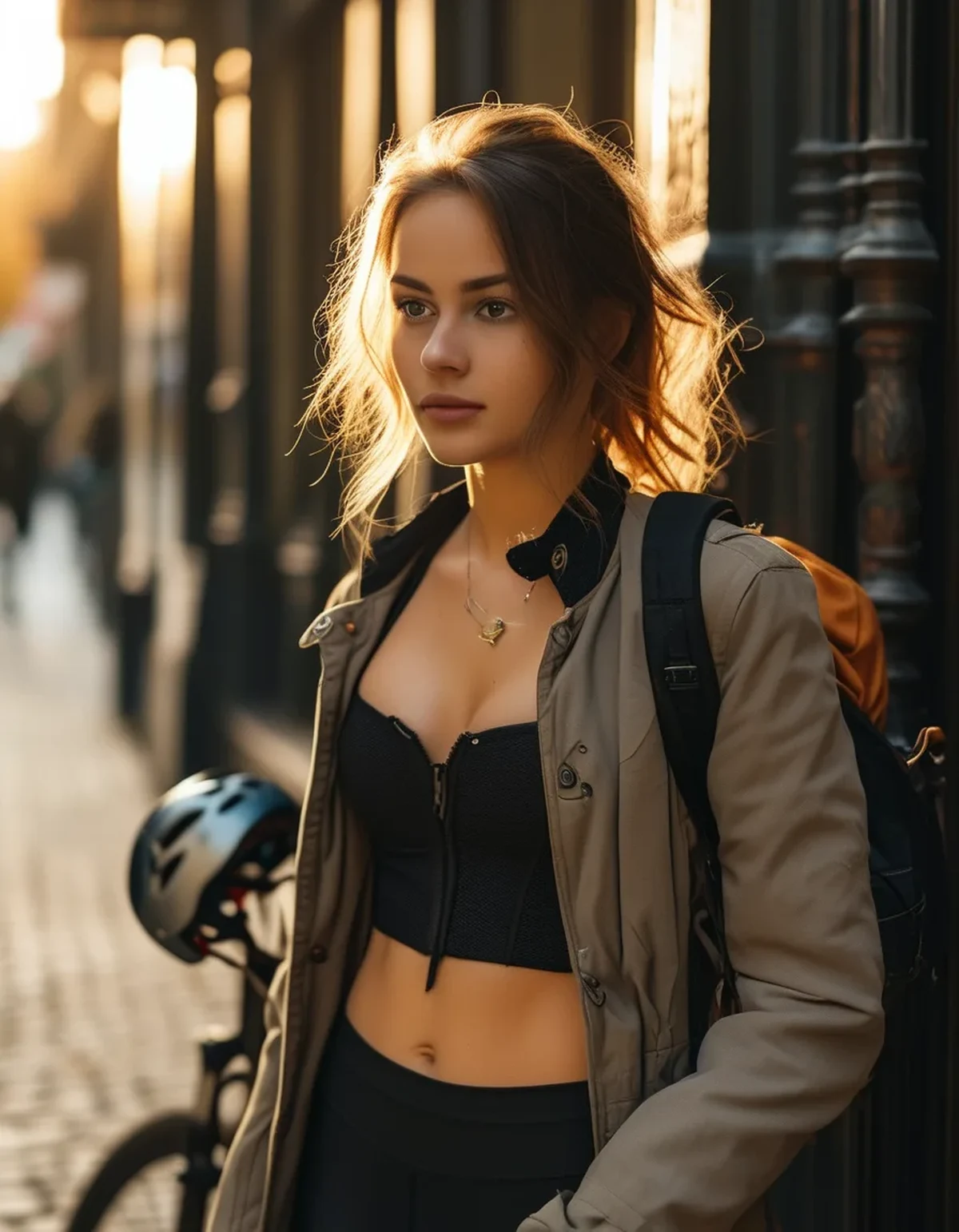
The bag problem, which is the biggest one
A tote or a shoulder bag is unusable on a bike. It swings into the pedals, pulls one shoulder down over a twenty-minute ride, and destroys the balance that makes riding in normal clothes comfortable.
This matters because the bag is what usually converts activewear into an outfit. A structured bag is the single most reliable studio-to-street trick, and cycling removes it from the toolkit entirely.
A compact backpack in a non-technical material is the substitute. Leather, canvas, or a matte structured nylon reads as a normal bag rather than gym kit, which is exactly the job the tote was doing.
Avoid the bright technical daypack. A neon or heavily-branded sports backpack puts the outfit firmly back into gym territory the moment you take the helmet off.
Watch the back sweat. Any backpack traps heat against the spine, so anything you plan to wear at the destination should not be the layer under the straps - carry it rather than wear it.
Or use panniers and skip the back entirely. If your bike takes a rack, a single pannier removes both the sweat and the balance problem and is by some distance the most comfortable option for a regular commute.
The hem problem
Wide-leg trousers and flared leggings catch the chain, which is both an outfit problem and a safety one. This eliminates the most popular current studio-to-street silhouette in one step.
Straight or tapered legs are the requirement, not a preference. A 7/8 legging is close to ideal - narrow enough to stay clear, long enough not to read as gym-only.
If you want a wider leg, keep a strap or a clip in your bag. A simple ankle strap on the drive side makes a wide-leg trouser workable and takes two seconds to fit.
Long coats have the same issue at the back. Anything below mid-thigh catches on the saddle when you get on and off, and on a wet day the back hem picks up road spray.
A cropped or hip-length jacket is the cycling-compatible version of the layer that usually converts a studio outfit. Hip length is the sweet spot - long enough to cover the seat when standing, short enough not to bunch on the saddle.
And check the drawstring. Loose jacket cords and long straps are a genuine hazard around a rear wheel, so tuck or shorten anything that dangles.
The saddle problem
Twenty minutes of saddle contact does things to leggings that a studio session does not. A centre back seam sits directly on the saddle and both marks the fabric and creates a pressure point.
Flat-seam or seamless-back constructions are noticeably better for regular riding, and this is the one specification worth checking before buying if you cycle often.
Anything decorative on the seat is a bad idea. Mesh panels, contrast stitching, and logos wear through faster at the saddle contact point than anywhere else in a legging’s life.
Saddle contact also accelerates the thinning that causes sheerness. The friction is constant and localised, so a legging used for cycling will go sheer at the seat sooner than the same pair used only in class.
Keep one pair as the commute pair. Rotating a designated cycling legging protects the pairs you want to stay opaque for the studio, and it is the simplest fix available.
And skirts and dresses are more workable than people assume with a pair of shorts underneath - they solve the saddle friction problem completely, though they add a wind problem instead.
The helmet problem, and the temperature one
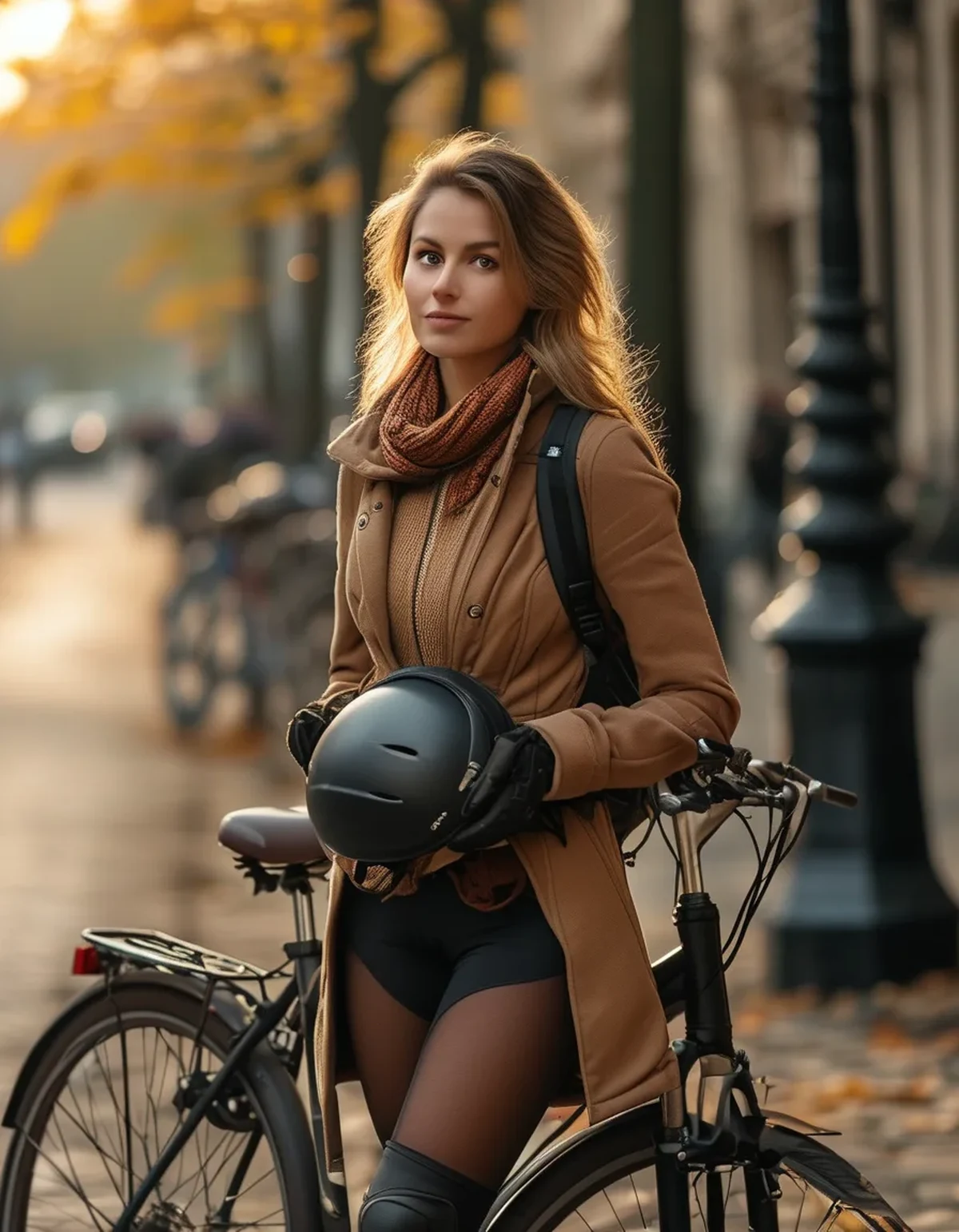
A helmet undoes hair, and hair is a large part of what makes activewear read as put-together. Fighting this after arrival rarely works.
Plan the hairstyle around the helmet, not after it. A low bun or a braid that sits below the helmet line survives the ride intact, while a high ponytail or anything at the crown does not.
Keep a clip and a small brush in the bag rather than intending to fix it with your hands. Thirty seconds of actual tools beats five minutes of hoping.
Cycling generates its own weather. You arrive warmer than you left even on a cold morning, so dress about one layer lighter than the temperature suggests and carry the extra layer for when you stop.
Wind chill on an autumn morning is the underestimated part. At cycling speed, 10 degrees Celsius feels closer to 5, and it is the hands and ears that suffer first rather than the core.
Light gloves and a thin headband under the helmet solve nearly all of the early-autumn discomfort, and both pack down to nothing in the bag afterwards.
And plan for arriving sweaty even in cool weather. A small towel and a change of top turns a compromised arrival into a normal one, and it takes almost no space.
FAQ: Cycling in Studio-to-Street Clothes, Answered
What is the biggest thing cycling breaks in a studio-to-street outfit?
The bag. A structured tote is the most reliable way to make activewear read as an outfit, and it is unusable on a bike. A compact backpack in leather, canvas, or matte nylon is the substitute.
Can I wear wide-leg trousers on a bike?
Only with an ankle strap or clip on the chain side. Otherwise the hem catches, which is both an outfit and a safety problem. Straight or tapered legs are the practical default.
What jacket length works best?
Hip length. Long enough to cover the seat when standing, short enough not to bunch on the saddle or catch when you swing a leg over.
Do leggings wear out faster if I cycle in them?
Yes, at the saddle contact point specifically. Constant localised friction thins the knit and brings on sheerness sooner. Designate one pair as the commute pair.
Which leggings hold up best for a bike commute?
Flat-seam or seamless-back constructions, with nothing decorative at the seat. A centre back seam sits exactly on the saddle and both marks and pressures.
How do I deal with helmet hair?
Plan around it rather than fix it afterwards. A low bun or braid below the helmet line survives the ride. Keep a clip and a small brush in the bag.
How should I dress for a cold morning ride?
About one layer lighter than the temperature suggests, since you generate heat quickly, and carry the extra layer for when you stop. Light gloves and a thin headband handle most early-autumn wind chill - at cycling speed 10°C feels closer to 5°C.
TL;DR:
- Cycling breaks four things: the bag, the hem, the saddle contact, and the hair.
- Swap the tote for a compact backpack in leather, canvas, or matte nylon - or use a pannier and skip the back sweat entirely.
- Straight or tapered legs only, or carry an ankle strap. 7/8 length is close to ideal.
- Hip-length jacket - covers the seat standing, does not bunch on the saddle.
- Flat-back, seamless leggings for the commute, and keep a designated commute pair so your studio pairs stay opaque.
- Plan the hair below the helmet line - low bun or braid, plus a clip and small brush in the bag.
- Dress one layer light and carry the extra. At cycling speed, 10°C feels closer to 5°C, and hands and ears go first.
A small towel and a spare top take almost no space and turn a sweaty arrival into a normal one.
See It in Motion
Seen here: High Waist Embossed Yoga Leggings with Side Pockets — shop it on bubblelime.com
Keep Reading
This article is for general informational and styling purposes only. Fit, sizing, and product availability may vary.